
What's Happening?
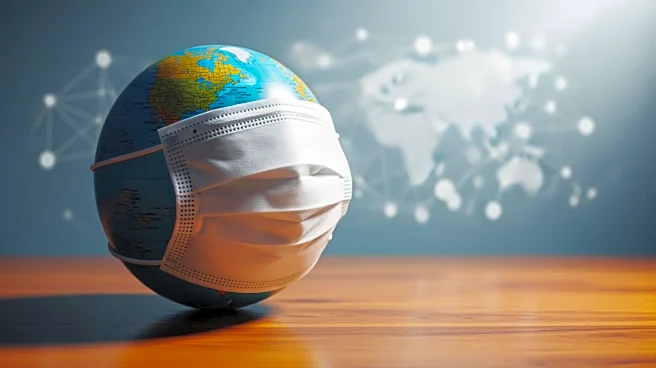
The United States has officially withdrawn from the World Health Organization (WHO), a decision formalized by President Trump through an executive order. The U.S. Department of Health and Human Services cited the WHO's alleged mishandling of the COVID-19
pandemic and political influences as reasons for the withdrawal. This move leaves the WHO without one of its largest donors, as the U.S. has not paid its fees for 2024 and 2025, amounting to over $260 million. The withdrawal has led to the termination of U.S. government funding to the WHO, the recall of U.S. personnel from WHO offices, and the suspension of hundreds of U.S. engagements with the organization.
Why It's Important?
The U.S. withdrawal from the WHO is significant as it disrupts global health initiatives, particularly those related to pandemic preparedness and response. The U.S. has been a major contributor to the WHO, and its absence could hinder efforts to combat global health issues such as polio, HIV/AIDS, and maternal mortality. The decision also reflects broader geopolitical tensions, as the U.S. criticized the WHO for being too 'China-centric.' This move may lead to a realignment of international health collaborations and could impact the U.S.'s influence in global health policy.
What's Next?
The WHO is set to discuss the U.S. withdrawal at its upcoming board meeting. Meanwhile, the U.S. plans to maintain its global public health leadership through bilateral agreements and partnerships with NGOs and faith-based groups. However, the specifics of these partnerships remain unclear. The U.S. may face pressure to reconsider its decision, especially given the potential global health implications and the need for international cooperation in addressing future pandemics.