









What's Happening?
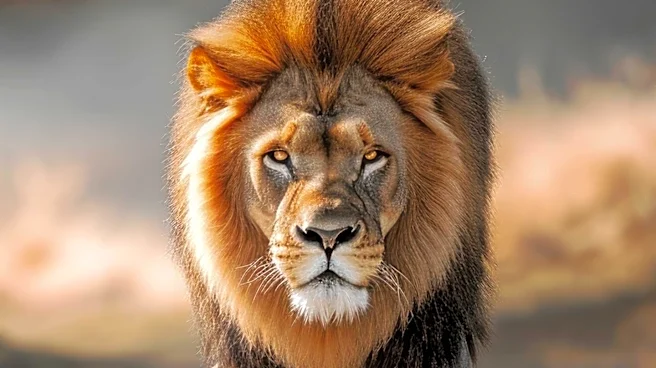
Male lions are known to patrol vast territories daily, a task that requires them to cover considerable distances. This daily patrol is essential for maintaining their dominance and protecting their territory from other males. For the largest territories,
a male lion might walk between 10 to 15 kilometers per day. This activity is a fundamental aspect of their behavior, ensuring the boundaries of their domain are clearly marked and defended. The continuous movement across their territory is not merely for defense but also plays a role in their overall survival strategy, including hunting and interaction with other pride members. The physical demands of this daily routine highlight the robust nature of these animals and their commitment to their territorial imperative.
Why It's Important?
The extensive daily patrolling by male lions is crucial for the ecological balance of their habitats. By maintaining their territories, they regulate the distribution of other lion prides and contribute to the overall health of the ecosystem. This behavior also impacts prey populations, as the presence of dominant male lions influences hunting patterns and the movement of herbivores. Understanding these territorial dynamics is vital for conservation efforts, as it helps in designing effective strategies for wildlife management and habitat preservation. The energy expenditure involved in covering such distances also provides insights into the physiological adaptations of lions and their role as apex predators in their environment. Disruptions to these territorial patterns, often caused by human encroachment or habitat fragmentation, can lead to increased conflict among lions and negatively impact their populations.
What's Next?
Continued research into the territorial behavior of male lions will likely focus on the impact of environmental changes and human activities on their daily patrols and territory sizes. Conservationists and researchers will monitor how factors such as climate change, habitat loss, and poaching affect the distances lions need to cover and the challenges they face in maintaining their territories. Future studies may also explore the genetic implications of territorial defense and how it influences the reproductive success and genetic diversity within lion populations. Understanding these evolving dynamics is critical for developing adaptive conservation strategies that can ensure the long-term survival of these magnificent predators in a rapidly changing world.
Beyond the Headlines
The daily patrols of male lions offer a deeper insight into the intricate social structures and survival strategies within the animal kingdom. Beyond the immediate need for territorial defense, this behavior underscores the concept of resource allocation and energy management in the wild. The sheer physical exertion required for these patrols highlights the evolutionary pressures that have shaped these animals, leading to their powerful physique and endurance. Ethically, observing such dedicated territoriality can prompt reflections on human impact on natural habitats and the responsibility to preserve the conditions that allow these complex behaviors to thrive. Culturally, the image of a patrolling lion symbolizes strength and guardianship, resonating across various human narratives and artistic expressions, emphasizing the profound connection between humans and the natural world.