

What's Happening?
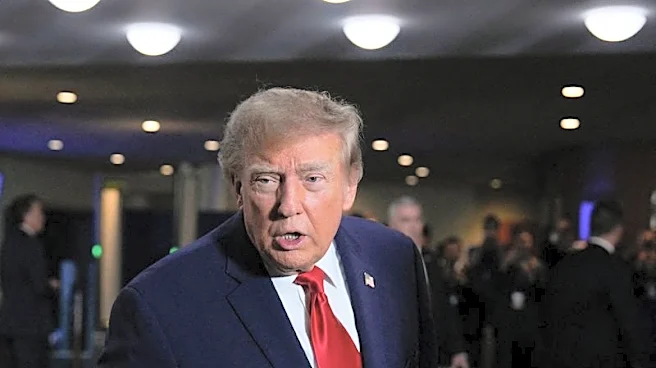
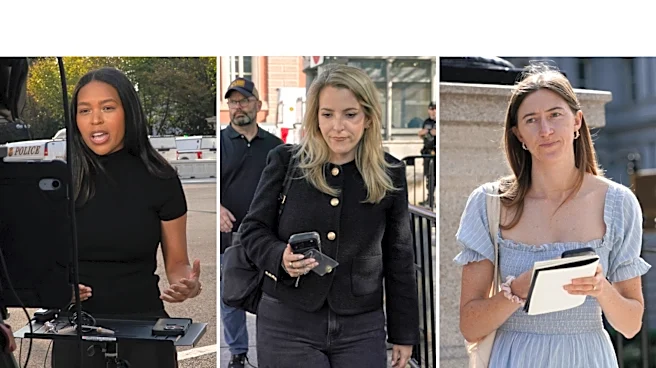
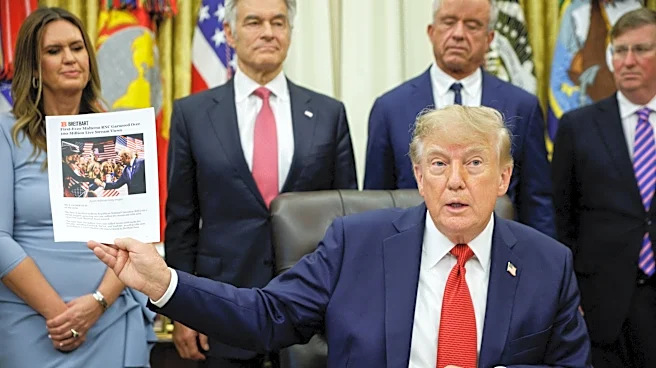
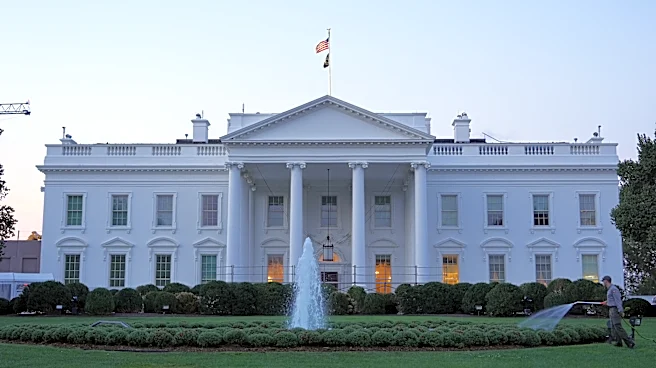
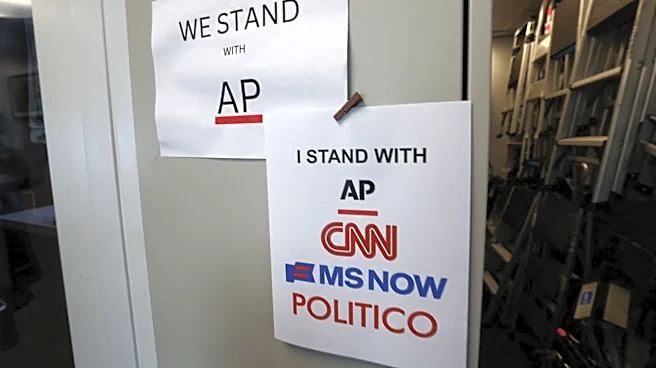
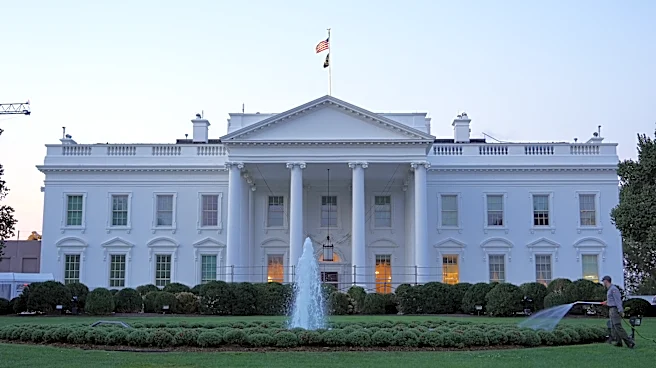
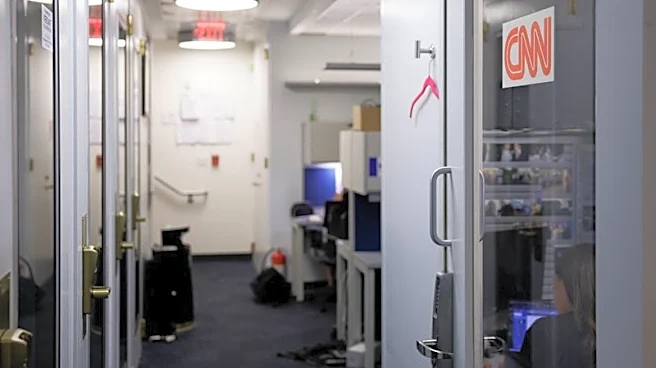
Three news organizations, CNN, MS Now, and Politico, have filed a lawsuit against President Trump and three top advisors after being barred from White House events. This legal action follows what the organizations describe as a 'direct assault on the First
Amendment,' stemming from the administration's decision to revoke their access. The ban is perceived as a case of 'viewpoint discrimination,' where access was denied due to unfavorable reporting. This incident is part of a broader pattern of the President's contentious relationship with the press, which has included previous bans, disrespectful remarks to reporters, and attempts to restrict journalistic access to government institutions like the Pentagon. The lawsuit aims to challenge these restrictions and restore the news organizations' access to White House briefings and events.
Why It's Important?
This lawsuit is significant as it directly challenges the executive branch's ability to control press access based on content, raising fundamental questions about press freedom and the First Amendment in the United States. The outcome could set a precedent for how future administrations interact with the media, potentially impacting the public's right to information and the transparency of government operations. If the administration's actions are upheld, it could embolden future leaders to restrict access to news outlets deemed critical, thereby limiting diverse perspectives in White House reporting. Conversely, a ruling in favor of the news organizations would reinforce the role of a free press as a check on power and protect journalists' ability to cover the presidency without fear of reprisal. This situation also highlights the ongoing tension between the executive branch and the media, a dynamic that has intensified in recent years.
What's Next?
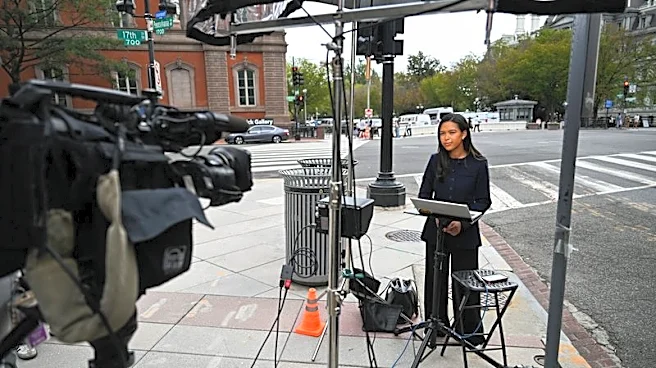
The legal proceedings will determine the immediate future of press access for the involved news organizations. Beyond the courtroom, there is a call for broader collective action from the Washington press corps. Some prominent figures, including Richard J Tofel, former president of ProPublica, and Bryan Boughton, Fox News Washington bureau chief, suggest that major news organizations should consider boycotting White House events until credentials are restored. The major TV networks have already taken a step in this direction by suspending 'pool coverage' of presidential events. Such a boycott, if widely adopted, could significantly alter the dynamics between the White House and the press, potentially forcing the administration to reconsider its policies on media access. The situation is seen by some as a 'moment of reckoning' for American democracy, with implications for how the press operates under future administrations.
Beyond the Headlines
The ongoing conflict between President Trump and the press extends beyond mere access disputes; it touches upon deeper ethical and cultural dimensions of American democracy. Critics argue that the President's actions are part of an 'autocratic playbook,' designed to silence dissent and control the narrative, which could erode public trust in independent journalism. The debate over whether journalists should maintain 'access' at all costs or prioritize 'principle' by boycotting events highlights a fundamental dilemma for news organizations. While some argue that covering the president is a journalistic duty, others contend that legitimizing restrictive practices by continuing to participate undermines the integrity of the press. This situation could lead to a long-term shift in how the White House press corps operates, potentially fostering more 'off-campus' investigative reporting and a greater emphasis on sourcing information independently, rather than relying on official briefings.