




What's Happening?
The Singapore government has reiterated that there will be no grants or subsidies for home solar panel installations in 2026. This stance is based on the Energy Market Authority's (EMA) assessment that solar energy costs are now generally cheaper than
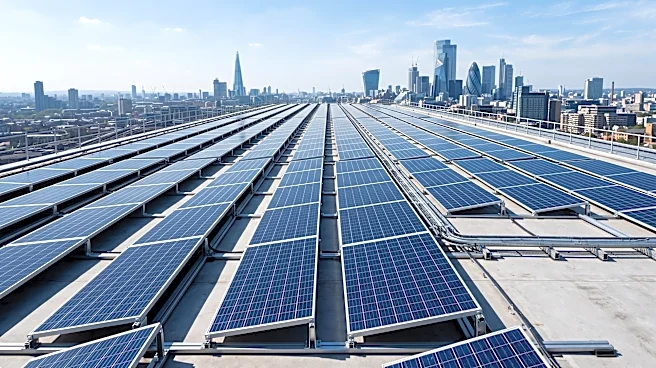
retail electricity prices, making home solar installations economically viable without direct government financial aid. The EMA also believes that feed-in tariffs and similar subsidies can distort energy markets and increase overall costs for consumers. Despite this, homeowners can still benefit from being paid for surplus solar power exported to the grid through their SP Group bill, retaining Renewable Energy Certificates (RECs), and streamlined approval processes for landed homes. The regulated tariff for electricity in Singapore is 31.16 cents per kWh (October to December 2026), contributing to a typical payback period of 3 to 6 years for well-sized home systems. For larger commercial buildings, however, the Building and Construction Authority's (BCA) Green Mark Incentive Scheme for Existing Buildings 2.0 (GMIS-EB 2.0) offers co-funding of up to 50% of costs, capped at S$1.2 million, for energy improvement works including solar installations on privately owned buildings of at least 5,000 sqm. This scheme is available until March 31, 2027, or until funds are fully committed.
Why It's Important?
This policy decision by the Singapore government highlights a shift in approach towards renewable energy adoption, moving away from direct residential subsidies as solar technology becomes more cost-effective. It signals a market-driven strategy where the economic benefits of solar, such as reduced electricity bills and export credits, are expected to drive residential uptake. This could serve as a model for other nations considering the long-term sustainability of renewable energy incentive programs. For the commercial sector, continued subsidies through schemes like GMIS-EB 2.0 indicate a strategic focus on larger-scale decarbonization efforts in urban environments, where significant energy consumption occurs. The absence of residential subsidies might encourage innovation in financing models, such as 'zero upfront' commercial offerings, though these are not government-backed. The government's emphasis on market efficiency and avoiding market distortions through subsidies reflects a broader economic philosophy that could influence future energy policy decisions globally.
What's Next?
The Singapore government will continue to monitor solar adoption rates and may consider additional measures if needed, though no plans for compulsory solar installations on buildings are currently in place. The national solar targets have been raised to 3 GWp by 2030 and 4 GWp by 2035, indicating a sustained commitment to renewable energy expansion despite the lack of residential subsidies. Homeowners will need to rely on the economic viability of solar installations, including savings from self-consumption and credits for exported power, to justify their investments. Commercial entities will likely continue to leverage the BCA's GMIS-EB 2.0 scheme until its expiration in March 2027, or until funds are depleted, to offset installation costs. The market for solar financing solutions, such as rental or rent-to-own plans, is expected to evolve to cater to residential demand in the absence of direct government support. Future policy adjustments may focus on grid infrastructure improvements and regulatory frameworks to support higher levels of solar integration.
Beyond the Headlines
The Singaporean approach to solar subsidies reflects a broader global debate on the role of government intervention in nascent and maturing renewable energy markets. By withdrawing residential subsidies, Singapore is essentially testing the market's ability to sustain solar growth based on economic fundamentals alone. This could lead to a more robust and self-sufficient solar industry in the long run, less reliant on public funds. However, it also places a greater burden on individual homeowners to navigate the initial investment, potentially creating disparities in access based on financial capacity. The continued support for commercial buildings underscores a strategic prioritization of large-scale carbon reduction, aligning with Singapore's urban development goals. This dual approach—market-driven for residential and incentivized for commercial—could offer valuable insights into effective policy mixes for accelerating energy transitions in diverse economic contexts, particularly in highly urbanized nations with limited land for large-scale renewable projects.