



What's Happening?
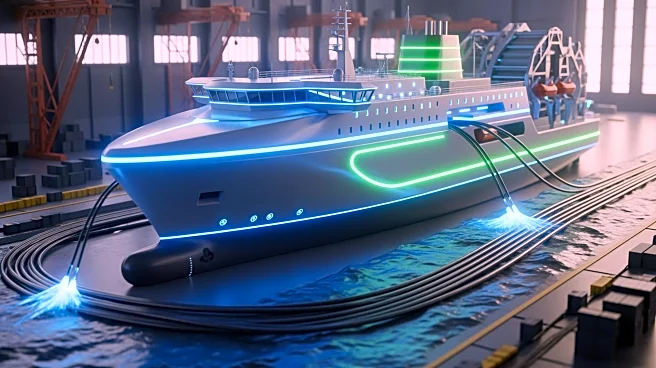
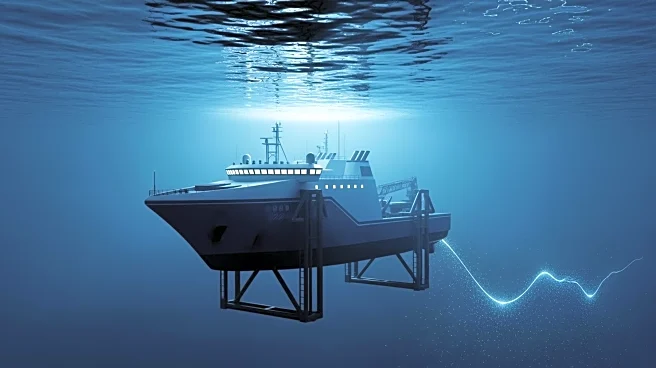
NYK Line, a major Japanese shipping company, has finalized the basic design of a new subsea cable-laying vessel intended to support Japan's high-voltage direct current (HVDC) transmission network. This development is part of Japan's broader initiative
to enhance its offshore renewable energy infrastructure. The vessel's design has received General Design Approval from ClassNK, a classification society, confirming its compliance with international conventions and classification rules. The project is a component of Japan's RIGHT Project, which aims to advance HVDC transmission technologies for renewable energy integration. NYK is collaborating with Sumitomo Electric Industries and Furukawa Electric to develop advanced cable protection methods and specialized vessels for subsea transmission infrastructure.
Why It's Important?
The completion of the vessel's design marks a significant step in Japan's efforts to build an efficient subsea power transmission system. This system is crucial for transporting electricity generated by offshore wind farms to onshore demand centers. The development of such infrastructure is vital for Japan's decarbonization strategy, as it seeks to expand its offshore wind capacity. The project also highlights the growing market for subsea cable installation vessels, as countries worldwide invest in offshore wind farms and HVDC transmission networks. The successful implementation of this project could set a precedent for similar initiatives globally, promoting the transition to renewable energy sources.
What's Next?
With the design milestone achieved, NYK and its partners will continue to advance the technologies required for subsea DC transmission infrastructure. The focus will be on developing specialized vessels and installation technologies to support the growth of offshore wind power. The project is expected to progress through further development stages, leading to the construction of the vessel. This initiative aligns with Japan's goal of expanding its renewable energy capacity and reducing its carbon footprint. The success of this project could encourage other nations to adopt similar strategies, contributing to global efforts to combat climate change.