
What's Happening?
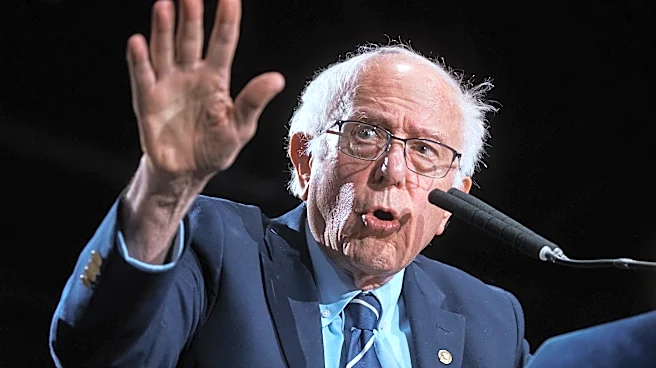
A recent vote in the U.S. Senate has highlighted a growing divide over military aid to Israel. The Senate defeated attempts to block arms transfers to Israel, with votes of 59-40 against blocking bulldozers
and 63-36 against blocking bombs. These resolutions, led by Senator Bernie Sanders, aimed to halt the sale of heavy munitions and engineering equipment to Israel. Despite the defeat, the vote revealed a significant shift within the Democratic Party, with 40 out of 47 Democratic senators supporting the effort to withhold military hardware. This marks a notable increase from previous years, indicating a shift in the party's stance on military aid to Israel.
Why It's Important?
The Senate vote underscores a potential strategic rupture in U.S.-Israel relations, particularly concerning military support. The increasing Democratic support for restricting arms sales to Israel suggests a changing political landscape in the U.S., where traditional bipartisan support for Israel is eroding. This shift could impact Israel's security strategy, which has long relied on U.S. military aid. The potential loss of predictability in U.S. support poses a strategic challenge for Israel, prompting discussions on the need for greater military independence. This development could lead to significant changes in how Israel approaches its defense and foreign policy, potentially affecting its regional security dynamics.
What's Next?
Israel is likely to accelerate its efforts towards military self-sufficiency, as indicated by its recent NIS 350 billion plan for domestic arms independence. This includes local production of critical military equipment and systems, such as the Iron Beam laser system and the Ro’em self-propelled howitzer. The shift towards 'iron independence' aims to reduce reliance on U.S. foreign military financing and mitigate the risks associated with changing U.S. political dynamics. As the Democratic Party's stance on military aid continues to evolve, Israel may need to further diversify its defense partnerships and invest in domestic military innovation to ensure its security remains robust and independent of U.S. political fluctuations.
Beyond the Headlines
The evolving U.S. political landscape, particularly within the Democratic Party, reflects broader shifts in American foreign policy priorities. The increasing influence of identity politics and intersectionality within the party may reshape traditional alliances and foreign policy strategies. For Israel, this means navigating a more complex international environment where historical alliances are no longer guaranteed. The push for military independence not only addresses immediate security concerns but also positions Israel to adapt to long-term geopolitical changes. This strategic pivot could redefine Israel's role as a regional power and its relationship with global allies.