
What's Happening?
Employees at the Louvre Museum in Paris are set to vote on whether to extend a strike that has already led to the closure of the world’s most visited museum. The strike, initiated by unions, is in response
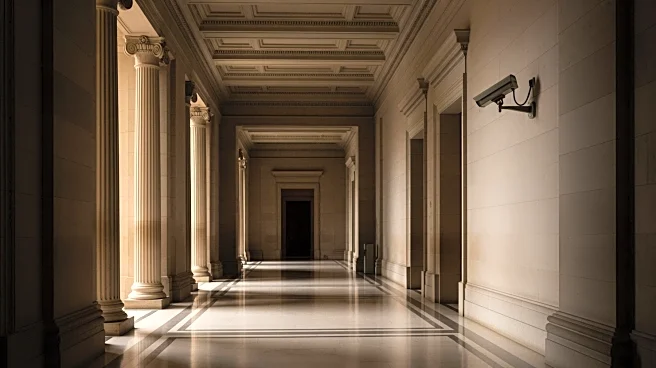
to chronic understaffing, deteriorating infrastructure, and recent management decisions. The situation has been exacerbated by a recent daylight robbery of crown jewels, which exposed significant security lapses at the museum. Culture Ministry officials have engaged in crisis talks with unions, proposing measures such as canceling a planned $6.7 million funding cut for 2026, recruiting new gallery guards, and increasing staff compensation. However, union officials have deemed these measures insufficient. The vote on whether to continue the strike is expected to take place before Louvre President Laurence des Cars appears before the Senate’s culture committee to address the security failures.
Why It's Important?
The strike at the Louvre Museum highlights significant issues within one of the world's most iconic cultural institutions. The security lapses that allowed for the theft of crown jewels have raised concerns about the museum's ability to protect its valuable collections. The ongoing labor dispute underscores broader challenges in managing cultural heritage sites, including the need for adequate staffing and infrastructure maintenance. The outcome of the strike could influence future policies regarding museum management and security, potentially affecting how cultural institutions worldwide address similar challenges. The situation also reflects broader labor tensions in France, where workers are increasingly vocal about working conditions and management practices.
What's Next?
The decision on whether to extend the strike will be made during a general assembly of museum workers. If the strike continues, it could lead to prolonged closure of the museum, affecting tourism and the local economy. The appearance of Louvre President Laurence des Cars before the Senate’s culture committee may result in increased scrutiny and pressure on museum leadership to implement effective security measures. The Culture Ministry's recent appointment of Philippe Jost to help reorganize the museum indicates a commitment to addressing these issues, but the effectiveness of these efforts remains to be seen. The situation may prompt other cultural institutions to reassess their security and management practices.