



What's Happening?
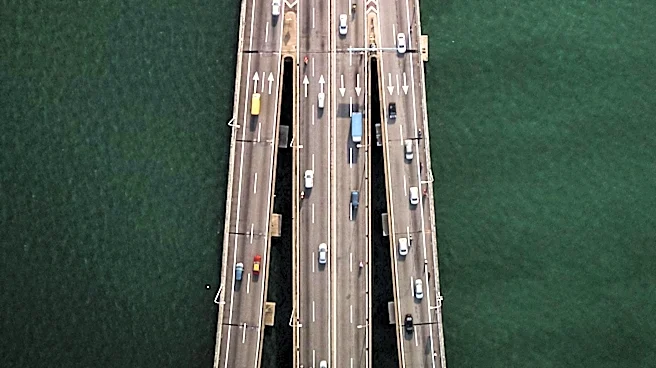
Sound Transit is investigating the deaths of fish in Lake Washington near the I-90 floating bridge rail line, which opened on March 28, connecting Seattle to the Eastside. The issue came to light on August 3 when the Washington State Department of Transportation
alerted Sound Transit to deceased fish in the vicinity. Sound Transit CEO Dow Constantine stated that dive teams, fish biologists, and engineers were deployed to investigate. Initial findings suggest a potential connection between the fish mortality and localized portions of the bridge's cathodic protection system, specifically where strings of anodes were clustered and resting on the lakebed. This cathodic protection system is designed to prevent corrosion of metal structures by managing low-level electrical current. While the majority of identified dead fish are non-native or invasive perch or bass, some salmon have also been found. As a mitigation measure, the anode strings were lifted off the lakebed and suspended in the water on August 23. Washington State Secretary of Transportation Julie Meredith affirmed that the bridge remains safe for public travel, and monitoring and analysis are ongoing to determine the root cause and develop a long-term solution.
Why It's Important?
This incident is important because it highlights the complex environmental challenges associated with large-scale infrastructure projects, particularly those involving sensitive ecosystems like Lake Washington. The unexpected fish deaths raise concerns about the environmental impact of the world's first light rail line on a floating bridge, despite extensive planning and engineering. It underscores the need for continuous environmental monitoring and adaptive management strategies even after project completion. The involvement of both Sound Transit and the Washington State Department of Transportation, along with fish biologists and engineers, demonstrates the multi-agency effort required to address such issues. The potential harm to fish populations, including native salmon, could have broader ecological consequences for the lake's biodiversity and the health of the surrounding environment. Furthermore, public trust in large infrastructure projects can be affected by unforeseen environmental incidents, emphasizing the importance of transparency and effective problem-solving.
What's Next?
Sound Transit remains in "discovery mode" as it continues to investigate the root cause of the fish deaths. Fish biologists and engineers are analyzing photos from dive teams, and monitoring and analysis are ongoing to determine if the mitigation measure of suspending the anode strings has resolved the problem. The agencies involved are committed to ensuring an effective and continuously monitored long-term solution. This will likely involve further scientific study to definitively link the cathodic protection system to the fish mortality and to understand the precise mechanisms of impact. Depending on the findings, Sound Transit may need to implement additional engineering modifications or operational changes to its electrical management system. The incident could also lead to a review of environmental impact assessment protocols for future projects, particularly those involving novel engineering solutions in aquatic environments. Public updates on the investigation's progress and proposed solutions are expected as more information becomes available.
Beyond the Headlines
The situation with the I-90 floating bridge rail line and the fish deaths delves into the intricate balance between urban development, technological innovation, and environmental preservation. The engineering feat of placing fixed rails on a floating bridge, while a testament to human ingenuity, has revealed unforeseen ecological vulnerabilities. This incident prompts a deeper examination of the long-term environmental consequences of advanced infrastructure, even when designed with extensive testing and seemingly robust protection systems. It raises questions about the adequacy of current environmental impact assessments for novel technologies and the need for more comprehensive predictive modeling. The ethical dimension involves the responsibility of public agencies to protect natural resources while simultaneously providing essential services. Culturally, the incident may reignite discussions about the value of urban expansion versus ecological integrity, particularly in regions with strong environmental advocacy and a deep connection to natural landscapes like the Pacific Northwest. It serves as a reminder that even the most meticulously planned projects can have unintended ecological footprints.