


What's Happening?
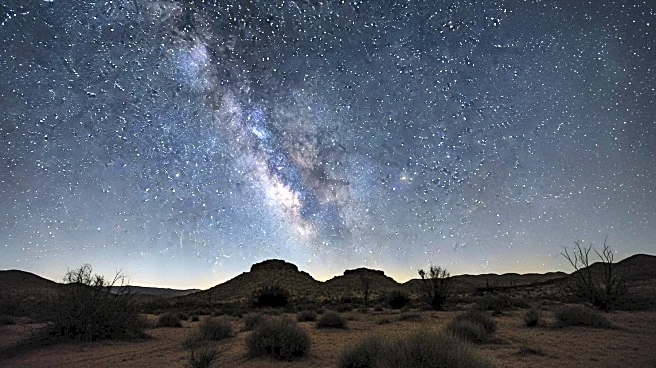
A recent stargazing trip to the Canary Islands has left a profound impression on visitors, showcasing the region's exceptional night skies. The trip, which included visits to La Palma and Tenerife, offered participants the opportunity to observe the Milky
Way, Andromeda, and other celestial bodies with unprecedented clarity. The Canary Islands are renowned for their minimal light pollution, making them an ideal location for astronomical observations. The experience was enhanced by visits to prominent observatories, such as the Roque de los Muchachos Observatory and the Gran Telescopio Canarias, which is the largest single optical telescope in the world. The trip also highlighted the islands' volcanic landscapes, adding to the unique experience of exploring both the earth and sky.
Why It's Important?
The Canary Islands' commitment to preserving dark skies is significant in the context of global efforts to reduce light pollution. This preservation not only benefits astronomical research but also enhances tourism, as stargazing becomes an increasingly popular attraction. The trip underscores the importance of protecting natural environments from artificial light, which can obscure the visibility of stars and other celestial phenomena. The experience also highlights the potential for educational and scientific opportunities, as the islands serve as a living laboratory for both astronomy and geology. By maintaining strict lighting regulations, the Canary Islands set an example for other regions seeking to balance development with environmental conservation.
Beyond the Headlines
The trip to the Canary Islands also raises awareness about the broader implications of light pollution on ecosystems and human health. Excessive artificial light can disrupt wildlife behavior and interfere with natural cycles, such as migration and reproduction. For humans, exposure to artificial light at night has been linked to sleep disorders and other health issues. The Canary Islands' approach to managing light pollution could inspire similar initiatives worldwide, promoting a greater appreciation for the natural night sky and its benefits. Additionally, the trip highlights the cultural and historical significance of stargazing, as it connects people to ancient traditions of observing the cosmos.