






What's Happening?
The United States has intensified its enforcement actions in Latin America by designating two major Brazilian criminal organizations, Comando Vermelho (CV) and Primeiro Comando da Capital (PCC), as Foreign Terrorist Organizations (FTOs) and Specially
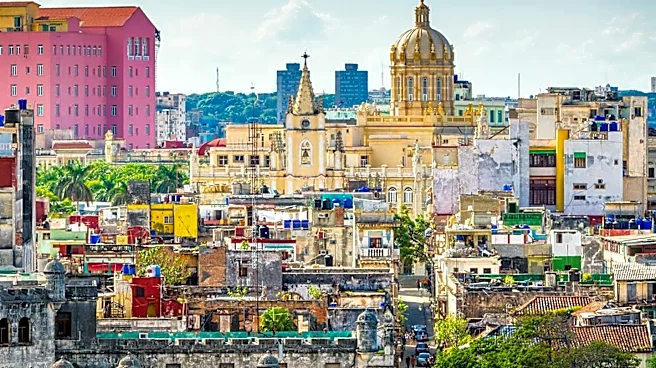
Designated Global Terrorists (SDGTs). This move, announced by the U.S. Department of State, highlights the organizations' extensive influence beyond Brazil's borders. Concurrently, the U.S. has imposed new sanctions on Cuba, targeting the military-controlled conglomerate Grupo de Administración Empresarial S.A. (GAESA) and its foreign business partners. These actions, effective June 5, 2026, are part of a broader strategy to address national security threats in the region.
Why It's Important?
The designation of Brazilian criminal organizations as FTOs and SDGTs underscores the U.S. commitment to combating transnational crime and terrorism. This action increases the liability for U.S. and multinational companies operating in Brazil, particularly in sectors like financial services, energy, and commodities. The sanctions on Cuba, under Executive Order 14404, represent a significant shift in U.S. policy, expanding the scope of sanctions to include secondary sanctions on foreign entities engaging with Cuban military-controlled businesses. This could lead to substantial economic repercussions for international companies with ties to Cuba, as they risk being excluded from the U.S. financial system.
What's Next?
Companies operating in Brazil and Cuba must enhance their due diligence processes to avoid engaging with designated entities. The U.S. has provided a wind-down period for businesses to sever ties with Cuban entities, ending on June 5, 2026. Failure to comply could result in severe penalties, including exclusion from the U.S. financial system. The U.S. administration is likely to continue its aggressive stance on sanctions, potentially expanding its focus to other regions and entities perceived as threats to national security.
Beyond the Headlines
The U.S. actions reflect a broader geopolitical strategy to assert influence in Latin America and curb the operations of criminal organizations that threaten regional stability. The sanctions on Cuba also signal a hardening of U.S. policy towards the island nation, potentially affecting diplomatic relations and economic engagements. These developments may lead to increased scrutiny of multinational corporations' operations in high-risk regions, prompting a reevaluation of compliance and risk management strategies.