



What's Happening?
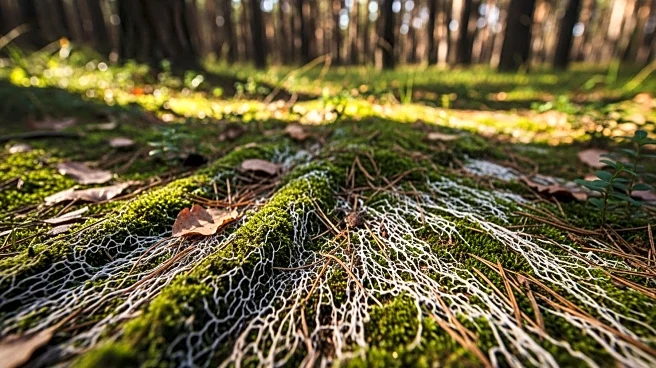
The largest organism in the world, a fungus known as the honey fungus, was discovered in Oregon's Malheur National Forest. This fungus covers an area equivalent to 1,500 soccer fields and is estimated to be 8,650 years old. The honey fungus, scientifically
named Armillaria ostoyae, grows in North America and feeds on trees, exhibiting bioluminescence known as 'foxfire.' The discovery was made in 1998 after a genetic investigation revealed that a single clonal individual was responsible for the death of over a hundred trees in the forest. The fungus's extensive growth is attributed to its unique genes that allow it to extend its rhizomorphs through the soil in search of wood.
Why It's Important?
The discovery of the honey fungus highlights the complexity and scale of fungal organisms, which are often underestimated. This organism's ability to cover such a vast area and its age provide valuable insights into fungal biology and ecology. Understanding the growth and impact of such fungi is crucial for forest management and conservation efforts, as they can significantly affect tree populations and forest ecosystems. The honey fungus's bioluminescence and genetic makeup also offer potential research opportunities in biotechnology and environmental science.