


What's Happening?
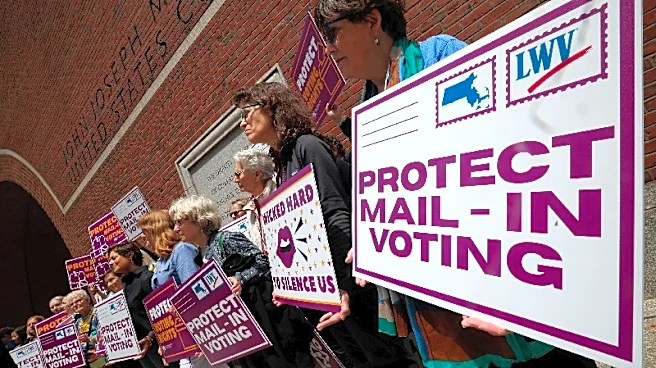
President Trump has once again appealed to the Supreme Court regarding restrictions on mail-in voting, as midterm elections approach. This legal challenge comes amidst ongoing litigation concerning an executive order issued by President Trump related
to mail ballots. Whistleblowers within the Postal Service have raised concerns, alleging that efforts to comply with President Trump's executive order have been rushed and sloppy. These claims suggest potential issues with the integrity and efficiency of mail-in voting processes under the current directives. The timing of this appeal is critical, as midterm mail ballots have already begun to be distributed to voters, creating uncertainty around the voting procedures. The legal battle highlights a broader national debate over election security and accessibility, particularly concerning methods of voting during significant election cycles. The Supreme Court's decision could have far-reaching implications for how votes are cast and counted in the upcoming elections and beyond.
Why It's Important?
The ongoing legal challenges to mail-in voting restrictions, particularly President Trump's appeal to the Supreme Court, carry significant weight for the U.S. electoral system. The outcome could influence voter turnout and the perceived legitimacy of election results. For voters, especially those who rely on mail-in ballots due to various circumstances, these restrictions could create barriers to exercising their right to vote. The allegations of rushed and sloppy implementation within the Postal Service, as reported by whistleblowers, raise concerns about the operational integrity of the mail-voting system, potentially eroding public trust in the electoral process. Furthermore, the Supreme Court's involvement underscores the contentious nature of election laws in the U.S., where voting procedures have become a central point of political and legal dispute. The decisions made in these cases will not only affect the current midterm elections but could also set precedents for future national and local elections, impacting how millions of Americans participate in democracy.
What's Next?
The immediate next step involves the Supreme Court's consideration of President Trump's appeal regarding mail-voting restrictions. A decision from the Court could either uphold existing restrictions, strike them down, or provide further guidance on the legality and implementation of mail-in voting procedures. Regardless of the ruling, significant reactions are expected from various stakeholders. Political leaders and parties will likely adjust their campaign strategies and voter outreach efforts based on the Court's decision. Civil society groups and voting rights organizations will closely monitor the situation, potentially launching new advocacy campaigns or legal challenges depending on the outcome. For the Postal Service, any ruling could necessitate further operational adjustments, especially in light of whistleblower concerns about rushed compliance. The ongoing distribution of midterm mail ballots means that any changes or clarifications from the Supreme Court will need to be communicated swiftly and clearly to election officials and the public to minimize confusion and ensure a smooth voting process.
Beyond the Headlines
Beyond the immediate legal and political implications, the persistent challenges to mail-in voting highlight deeper societal divisions regarding trust in institutions and the democratic process itself. The debate over mail-in voting touches upon fundamental questions of voter access versus election security, with different factions prioritizing one over the other. Ethically, the allegations of rushed and sloppy work within the Postal Service raise concerns about the government's responsibility to ensure fair and accessible elections for all citizens. Legally, the Supreme Court's engagement in these disputes underscores the judiciary's critical role in interpreting election laws and safeguarding constitutional rights, often placing it at the center of highly politicized issues. Culturally, the ongoing contention around voting methods reflects a broader polarization in American society, where even the mechanics of democracy can become battlegrounds. The long-term shift could be a continued erosion of bipartisan consensus on election administration, leading to more frequent and intense legal battles over voting rules in future election cycles.