




What's Happening?
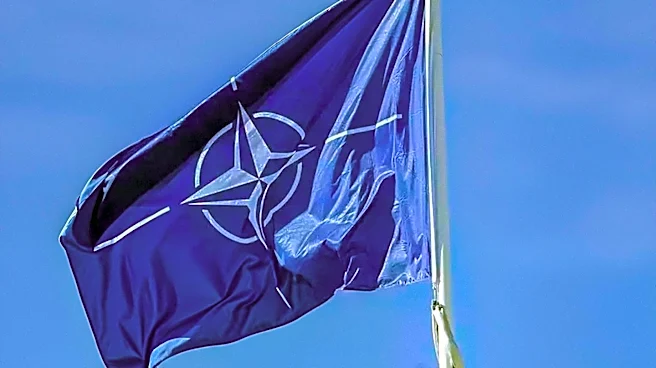
The NATO Political Committee recently held a working session in Chișinău, Moldova, to discuss priorities for cooperation between the Republic of Moldova and the North Atlantic Alliance. Deputy Prime Minister and Minister of Foreign Affairs Mihai Popșoi,
along with State Secretary Valeriu Mija, engaged in talks with the NATO delegation, including Ms. Tanya Hartman, Chair of the NATO Political Committee. The discussions focused on advancing political dialogue and practical cooperation, with a particular emphasis on implementing the objectives of the Moldova–NATO Individual Partnership Programme (ITPP) for 2025–2028. Moldova reaffirmed its interest in deepening its partnership with NATO, specifically in modernizing its national security and defense sector and enhancing institutional capacity to address current security challenges, all while maintaining its constitutional neutrality. Cooperation areas include institutional resilience, security and defense sector reform, professional development, cybersecurity, and strategic communications.
Why It's Important?
This ongoing collaboration between Moldova and NATO is significant for regional stability and cybersecurity in Eastern Europe. Moldova's commitment to modernizing its security and defense sector, with NATO's support, directly contributes to its ability to counter evolving threats, including cyberattacks and disinformation campaigns. Given the heightened cyber threats, particularly from Russia, strengthening Moldova's cyber defense capabilities through this partnership is crucial. The focus on institutional resilience and strategic communications also helps Moldova build a more robust defense against hybrid warfare tactics. For NATO, this partnership reinforces its presence and influence in a strategically important region, demonstrating its commitment to supporting the security of non-member states facing similar challenges. The cooperation also highlights the broader trend of nations seeking to enhance their cyber defenses in an increasingly digital and interconnected world.
What's Next?
Moldova and NATO will continue to implement the objectives outlined in the Moldova–NATO Individual Partnership Programme (ITPP) for 2025–2028. This will involve ongoing efforts to modernize Moldova's national security and defense sector, enhance institutional capacity, and further develop professional training and cybersecurity measures. The Moldovan side is expected to continue its active participation in international peacekeeping efforts, such as its contributions to the KFOR operation in Kosovo. Future discussions will likely focus on specific initiatives within cybersecurity and strategic communications to bolster Moldova's resilience against contemporary security challenges. The partnership will also aim to further strengthen political dialogue between Moldova and the Alliance, ensuring continued alignment on security priorities while respecting Moldova's neutral status.
Beyond the Headlines
The deepening cooperation between Moldova and NATO, particularly in cybersecurity, reflects a broader strategic shift in how nations approach national security in the digital age. While Moldova maintains its constitutional neutrality, its engagement with NATO on defense modernization and cyber resilience underscores the understanding that cyber threats transcend traditional geopolitical boundaries. This partnership could serve as a model for other neutral or non-aligned states seeking to enhance their security without fully joining military alliances. The emphasis on institutional resilience and strategic communications also highlights the growing recognition that modern warfare involves not only military capabilities but also the ability to counter disinformation and maintain public trust. This collaboration could foster greater regional stability and contribute to a more secure cyberspace for all involved, setting a precedent for how international cooperation can address complex, evolving security challenges.