
What's Happening?
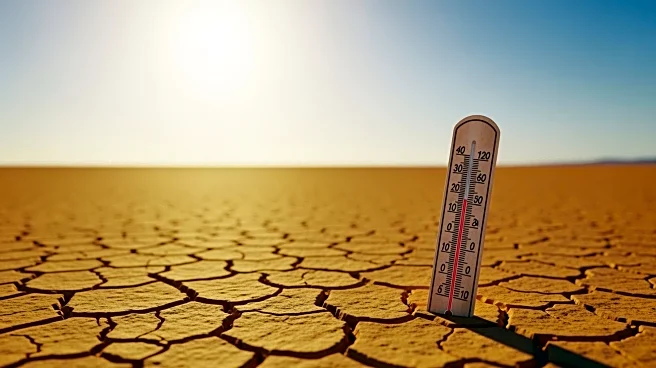
A record-breaking heat dome is expected to develop near the West Coast, bringing temperatures into the triple digits and breaking March records. This heat wave follows the warmest start to March on record for the U.S. and is expected to affect millions,
with temperatures potentially reaching 100 degrees in cities like Los Angeles, Phoenix, and Las Vegas. The heat dome is linked to a marine heat wave offshore, contributing to above-average sea temperatures. This pattern is expected to exacerbate drought conditions in the Intermountain West, with states like Utah and New Mexico experiencing record low snowpack levels. The heat wave could also indirectly cause flooding rains in Hawaii due to atmospheric blockages.
Why It's Important?
The anticipated heat wave poses significant challenges for the Western U.S., particularly in terms of water supply and drought management. With reservoirs in Utah at only 40% capacity, the state faces potential water supply cuts and increased conservation efforts. The heat wave's impact on agriculture and water resources could have broader economic implications, affecting industries reliant on water availability. Additionally, the marine heat wave could create a feedback loop, intensifying both sea and land temperatures, highlighting the ongoing challenges posed by climate change.
What's Next?
As the heat wave progresses, states in the West will need to implement water conservation measures and prepare for potential impacts on agriculture and public health. Monitoring by climate scientists and meteorologists will be crucial in predicting and mitigating the effects of this extreme weather event. The situation underscores the need for long-term strategies to address climate change and its impact on regional weather patterns.