






What's Happening?
U.S. Rep. Gary Palmer, representing Alabama’s 6th Congressional District, announced a $10 million project aimed at improving railroad crossings and reducing train delays in Birmingham and Trussville. This initiative, part of the R.E.D.E.S.I.G.N Alabama program,
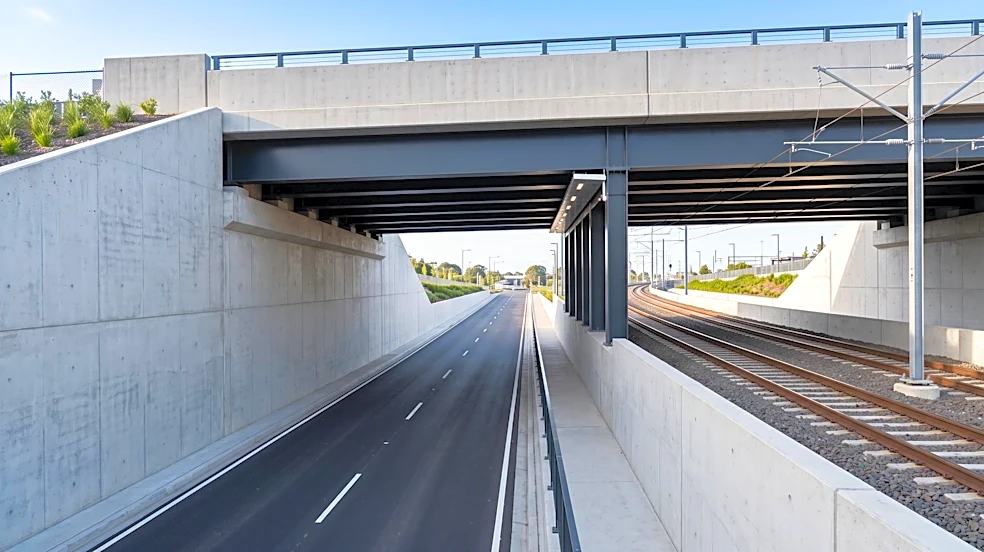
seeks to enhance public safety and improve the quality of life for residents frequently impacted by blocked crossings. The project involves closing nine at-grade railroad crossings between Woodlawn and Trussville, redirecting traffic to safer, grade-separated routes. Key components include extending a road to Brussels Avenue, creating an underpass for vehicles at Brussels Avenue, and building a pedestrian underpass near 59th Street. Additionally, a bridge will be constructed at Mary Taylor Road in Trussville, and tracks will be extended into Norfolk Southern’s Norris Yard to prevent trains from blocking motorists. The funding for this project includes an $8 million Consolidated Rail Infrastructure and Safety Improvement Grant from the federal government, $1.5 million from Norfolk Southern, and $500,000 collectively from the cities of Birmingham and Trussville. Engineering firm Kimley-Horn has been tasked with the design and environmental impact study, which is expected to take two years.
Why It's Important?
This $10 million infrastructure project is crucial for the communities of Birmingham and Trussville, addressing a long-standing issue that has significantly impacted daily life and public safety. Residents frequently face extended delays at railroad crossings, leading to lost family time, work disruptions, and concerns for emergency response. By implementing grade-separated crossings and underpasses, the project aims to drastically reduce these delays, ensuring smoother traffic flow and quicker access for emergency services. The extension of tracks into Norfolk Southern’s Norris Yard will prevent trains from stopping on main lines, a primary cause of blockages. Furthermore, the initiative is expected to create quieter neighborhoods in areas like Woodlawn, as the need for train horns and crossing alerts will be reduced. This investment in infrastructure not only improves local transportation efficiency but also enhances the overall quality of life and safety for thousands of residents, demonstrating a collaborative effort between federal, state, and local entities to solve critical community problems.
What's Next?
The immediate next step for the project involves the engineering firm Kimley-Horn undertaking the design of the new infrastructure and conducting an environmental impact study. This phase is anticipated to last approximately two years. Following the completion of the design and environmental review, the project partners will actively pursue additional federal and other funding opportunities to transition the initiative into the construction phase. Residents can expect continued updates on the progress of the design and environmental studies. Once construction begins, there will be significant changes to local traffic patterns and infrastructure, ultimately leading to the elimination of the problematic at-grade crossings and the implementation of the new overpasses and underpasses. The long-term outcome will be a substantial improvement in traffic flow, public safety, and reduced noise pollution in the affected areas.
Beyond the Headlines
Beyond the immediate benefits of reduced train delays and improved safety, this project highlights the broader challenges faced by communities situated along active rail lines and the complex interplay between urban development, infrastructure, and quality of life. The initiative underscores the importance of federal grants and public-private partnerships in addressing large-scale infrastructure needs that local municipalities might struggle to fund independently. The emphasis on grade-separated crossings reflects a growing national trend towards modernizing rail infrastructure to mitigate conflicts between rail and road traffic, a common issue in many U.S. cities. This project could serve as a model for other communities grappling with similar issues, demonstrating how strategic investments can lead to significant improvements in urban mobility and environmental conditions. The reduction in train horn usage, for instance, points to a subtle but impactful improvement in daily living for residents, addressing noise pollution that often accompanies busy rail corridors.