

What's Happening?
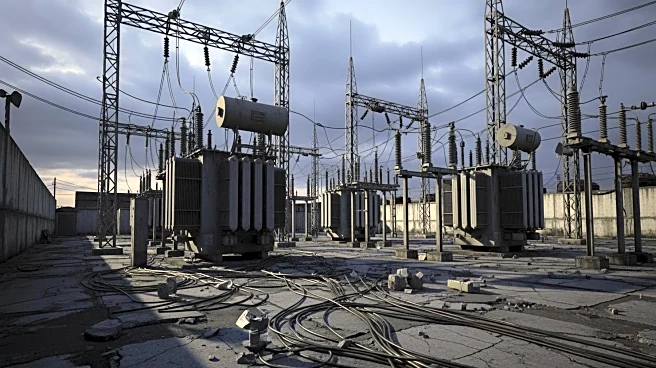
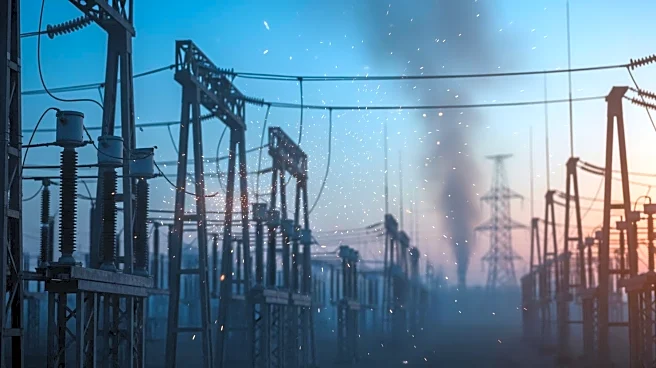
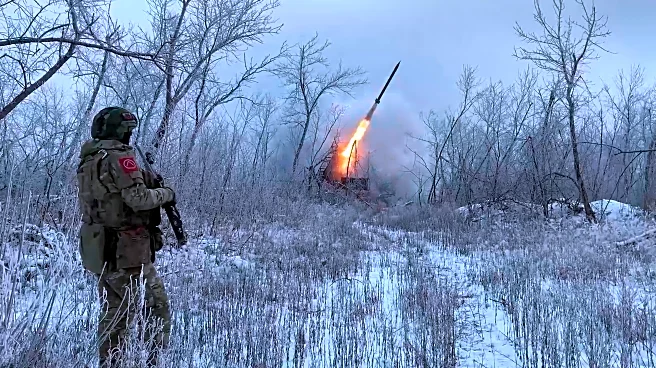
Ukrainian President Volodymyr Zelensky has called for an immediate increase in electricity imports following new Russian attacks on the country's energy infrastructure. The attacks, which occurred overnight on January 16-17, targeted substations in Odesa
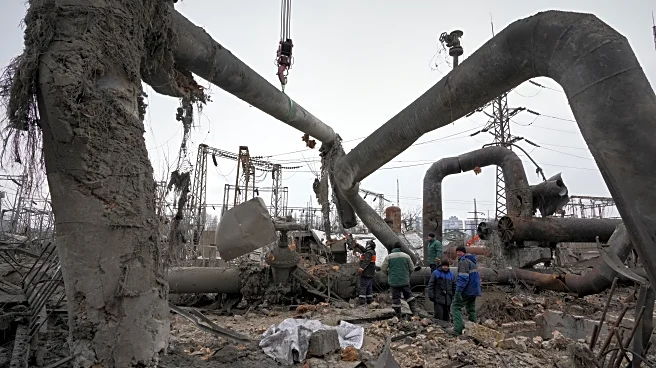
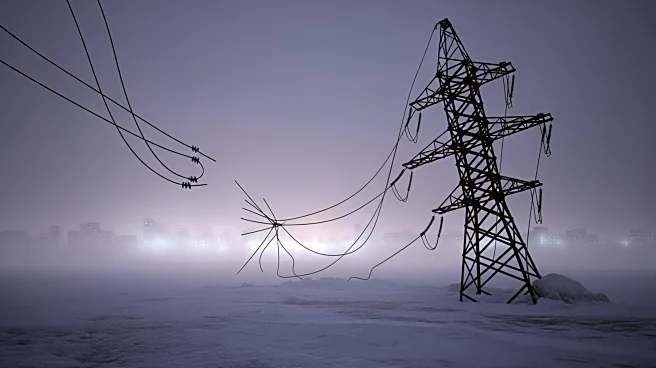
and Kyiv oblasts, leading to emergency power outages. The energy instability has also affected Poltava, Sumy, Chernihiv, and Dnipro oblasts. Ukraine is currently able to meet only 60% of its energy needs, producing 11 gigawatts of electricity against a requirement of 18 gigawatts. Despite efforts to ramp up imports, the country is limited by a maximum import capability of 2.3 gigawatts, with high prices further complicating the situation. Rolling blackouts are being implemented across the country to balance the grid. The attacks have severely damaged critical infrastructure, making repairs difficult amid freezing temperatures.
Why It's Important?
The ongoing attacks on Ukraine's energy infrastructure have significant implications for the country's ability to maintain essential services during the harsh winter months. The energy crisis exacerbates the humanitarian situation, as citizens face freezing conditions without reliable heating and power. The situation also highlights the strategic importance of energy infrastructure in conflict zones and the challenges of maintaining stability under continuous assault. The international community's response, including aid from Germany and the UK, underscores the geopolitical dimensions of the conflict, as Ukraine's allies seek to bolster its energy security. The crisis may influence future energy policies and international cooperation in the region.
What's Next?
Ukraine is expected to continue seeking international support to stabilize its energy sector. The newly appointed Energy Minister Denys Shmyhal is leading a task force to manage the crisis, and further international aid is anticipated. The situation remains volatile, with potential for further Russian attacks on energy infrastructure. Ukraine's ability to secure additional energy imports and repair damaged facilities will be crucial in mitigating the impact on its population. The international community's response, particularly from European allies, will play a key role in supporting Ukraine's energy resilience.