



What's Happening?
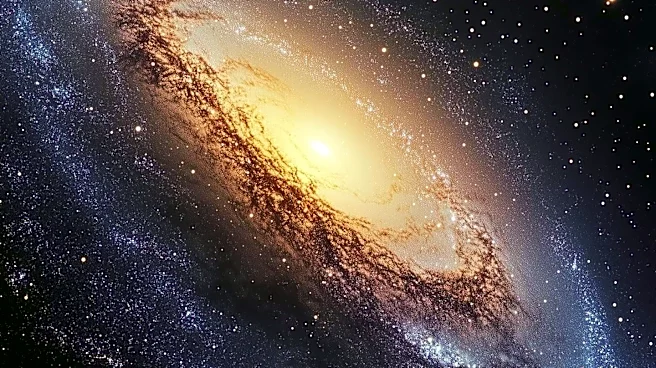
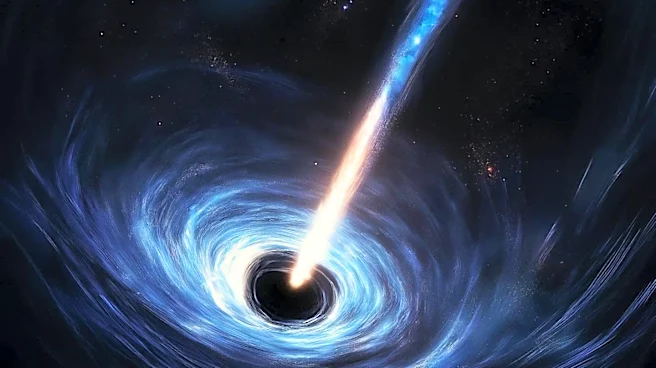
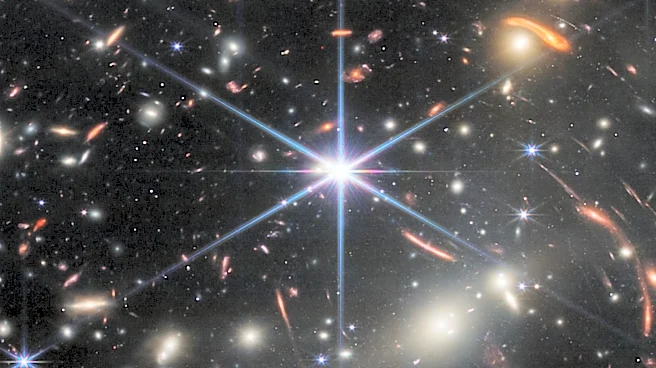
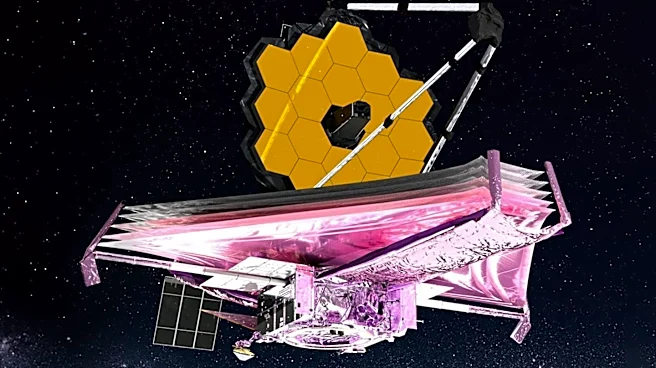
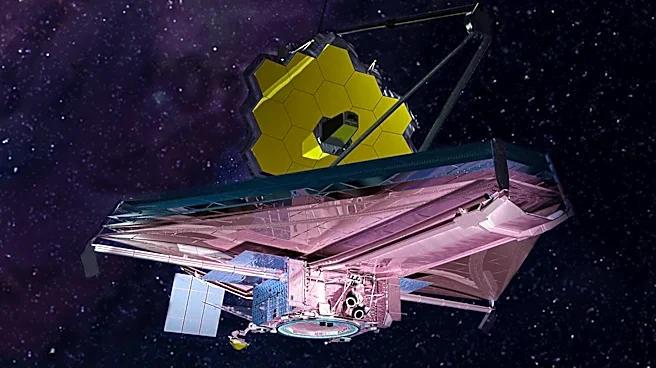
Astrophysicists are investigating unexpected observations of early black holes and galaxies using the James Webb Space Telescope (JWST). These findings challenge existing cosmological theories, suggesting that early galaxies may have formed stars more
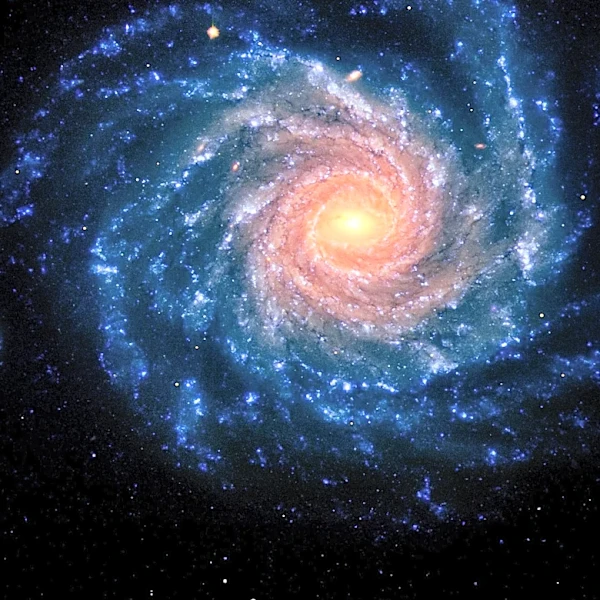
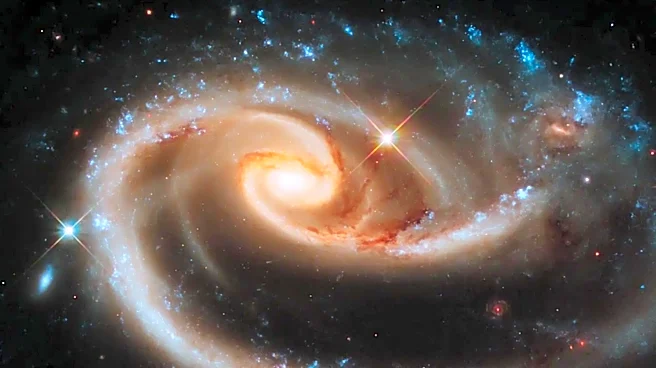
efficiently or experienced bursts of star formation. Researchers are using simulations to test these theories, aiming to understand the brightness and abundance of these early galaxies. The JWST's observations have revealed a diversity in early galaxies' properties, indicating complex star formation processes. This research is crucial for understanding the universe's early development and the formation of cosmic structures.
Why It's Important?
The discoveries made by the JWST have significant implications for our understanding of the universe's origins. By challenging existing cosmological models, these findings could lead to a revision of the fundamental laws governing energy and matter in the early universe. This research not only enhances our knowledge of cosmic history but also informs future astronomical studies and technologies. The ability to simulate and compare early universe conditions with current observations allows scientists to refine their models, potentially leading to breakthroughs in astrophysics and cosmology.
What's Next?
Researchers will continue to refine their models and simulations to better understand the early universe's conditions. As the JWST collects more data, scientists will compare these observations with their theoretical models to identify the most accurate explanations for the observed phenomena. This ongoing research will likely lead to new theories and insights into the universe's formation and evolution. The scientific community will closely monitor these developments, as they could reshape our understanding of the cosmos.