
What's Happening?
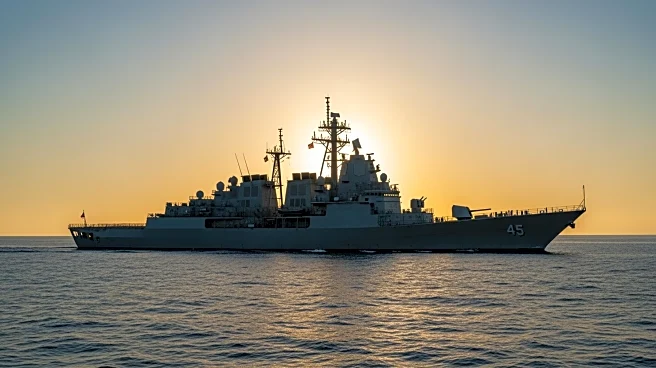
The Russian Pacific Fleet has embarked on a long-distance mission from Vladivostok to the Red Sea, involving the frigate Marshal Shaposhnikov, the corvette Gremyashchy, and the large sea tanker Boris Butoma.
This deployment is part of Russia's strategy to maintain a naval presence in strategically important regions, including the Mediterranean and the Red Sea. The fleet's journey included stops in Vietnam, Thailand, and Myanmar, showcasing Russia's naval diplomacy and its efforts to strengthen ties with friendly nations. The mission underscores Russia's intent to project power and influence in the Indo-Pacific region, despite geopolitical tensions.
Why It's Important?
This deployment highlights Russia's ongoing efforts to assert its naval presence in key global regions, which is crucial for its strategic interests. By maintaining a presence in the Red Sea and potentially the Mediterranean, Russia aims to counterbalance NATO's influence and secure its geopolitical interests. The mission also reflects Russia's commitment to sustaining its military capabilities and partnerships in the Indo-Pacific, a region of growing strategic competition. This could have implications for regional security dynamics, particularly in light of Russia's military engagements in Syria and its broader foreign policy objectives.
What's Next?
The Russian Pacific Fleet's activities in the Red Sea may lead to further naval exercises and collaborations with other nations, including potential interactions with Chinese naval forces in the region. This could enhance military cooperation between Russia and China, signaling a closer alignment of their strategic interests. Observers will be watching for any developments that might indicate a shift in regional power dynamics or an escalation of military posturing. The continuation of such deployments could also prompt responses from other regional powers, potentially affecting the balance of power in the Indo-Pacific.