
What's Happening?
On January 14, US Envoy Steve Witkoff announced the launch of Phase Two of President Trump's 20-Point Plan to End the Gaza Conflict. This phase focuses on demilitarization, technocratic governance, and
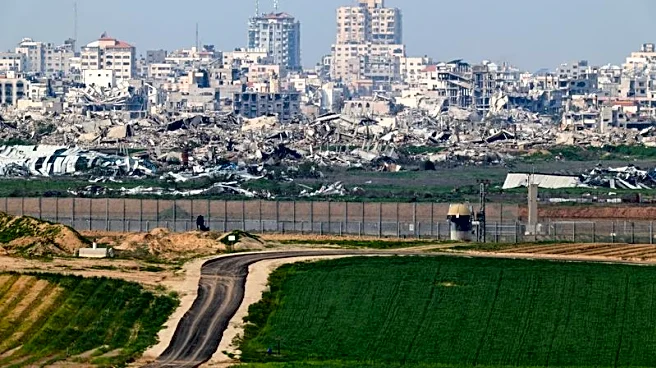
reconstruction in Gaza. The plan establishes a transitional technocratic Palestinian administration, the National Committee for the Administration of Gaza (NCAG), and aims for the full disarmament of unauthorized personnel, including Hamas. The US expects Hamas to comply fully, with serious consequences for non-compliance.
Why It's Important?
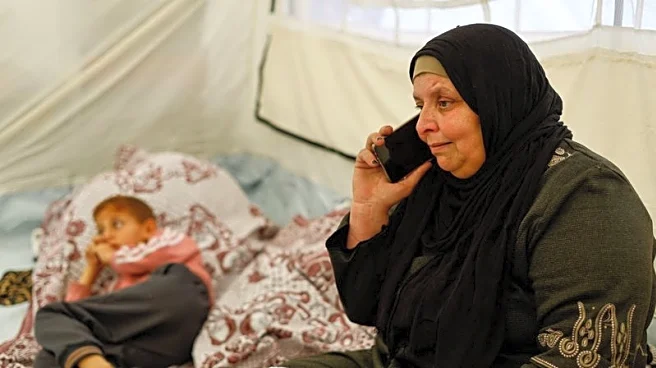
The move to Phase Two of the Gaza peace plan is crucial for stabilizing the region and reducing military tensions. Successful disarmament of Hamas could lead to a more peaceful and secure environment, benefiting both Palestinians and Israelis. The plan's focus on reconstruction and governance aims to improve living conditions in Gaza, potentially fostering economic growth and political stability. However, the reluctance of countries to send forces to Gaza poses a challenge to the plan's implementation.
What's Next?
The establishment of the technocratic government and the disarmament process will be closely monitored by international stakeholders. The US and other countries involved in the peace plan will need to address logistical and political challenges to ensure compliance and progress. The deployment of the International Stabilization Force, authorized by the UN Security Council, is expected to facilitate the withdrawal of Israeli forces and support the transition to peace.
Beyond the Headlines
The peace plan's success hinges on Hamas's willingness to disarm, which remains uncertain. The plan also raises ethical and legal questions about the use of international forces in conflict zones and the balance between security and sovereignty. Long-term peace in Gaza will require addressing underlying issues such as economic disparity and political representation.