

What's Happening?
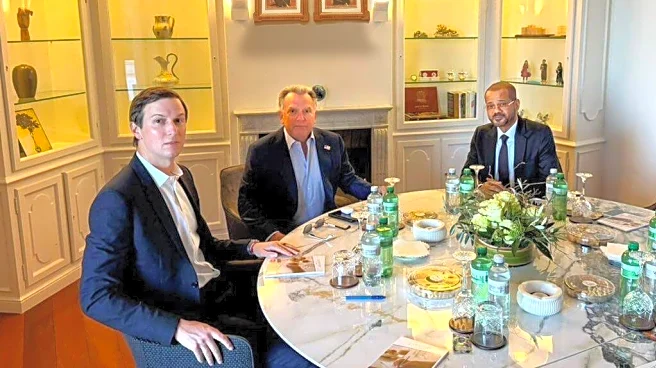
Iranian Foreign Minister Abbas Araghchi has arrived in Geneva for a third round of indirect negotiations with US representatives concerning Iran's nuclear program. These talks, facilitated by Omani Foreign Minister Sayyid Badr bin Hamad Al Busaidi, follow
previous rounds held in Muscat and Geneva earlier this month. The discussions are taking place against a backdrop of heightened tensions, with reports suggesting the US is prepared for potential military action against Iran. President Trump, in a recent State of the Union address, hinted at the possibility of strikes, while Iran seeks a fair agreement that includes the lifting of sanctions. The indirect nature of the talks, insisted upon by Iran, is reportedly slowing progress.
Why It's Important?
The outcome of these negotiations could significantly impact international relations and regional stability. A successful agreement might ease tensions and prevent potential military conflict, which could have severe consequences for global security and the economy. The talks are crucial for Iran, which is seeking relief from economic sanctions that have crippled its economy. For the US, reaching a diplomatic solution could enhance its standing in the international community and reduce the risk of further conflict in the Middle East. The involvement of Oman as a mediator underscores the complexity and sensitivity of the negotiations.
What's Next?
The continuation of these talks suggests that both parties are still seeking a diplomatic resolution. However, the indirect nature of the negotiations and the existing geopolitical tensions could pose challenges. Future discussions will likely focus on the specifics of any potential agreement, including the conditions for lifting sanctions and ensuring compliance with nuclear regulations. The international community will be closely monitoring these developments, as the outcome could influence broader diplomatic efforts and regional alliances.
Beyond the Headlines
The indirect talks highlight the strategic role of Oman in facilitating dialogue between Iran and the US, reflecting its position as a neutral party in the region. The negotiations also underscore the broader geopolitical dynamics at play, including the influence of regional powers and the potential for shifts in alliances. The emphasis on national unity by Iranian leaders suggests internal pressures and the need to present a cohesive front amid external threats.