




What's Happening?
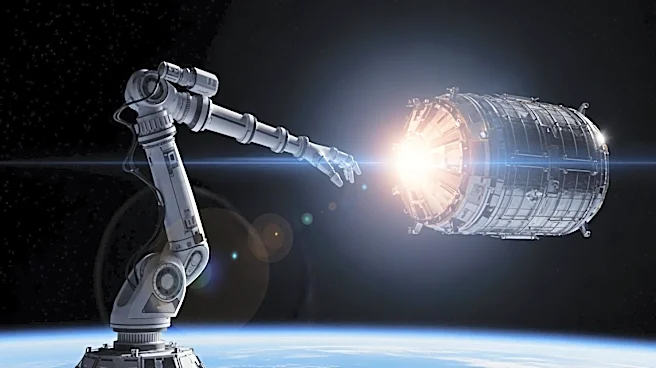
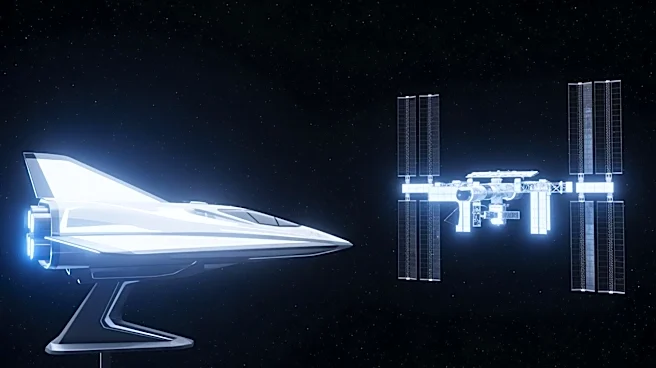
NASA astronauts Chris Williams and Jack Hathaway, part of the Expedition 74 crew, have begun new scientific experiments and activated research hardware aboard the International Space Station (ISS). The equipment was delivered by a Cygnus XL cargo spacecraft.
Among the new installations is the European Enhanced Exploration Exercise Device (E4D), which is being set up in the Columbus laboratory module. This device, provided by the European Space Agency, is designed to support astronaut workouts during missions to the Moon and Mars. Additionally, the Space Surface Spirulina experiment has been initiated to explore efficient protein production and carbon dioxide processing in space. This involves growing spirulina microalgae in weightlessness to aid future life support systems. Furthermore, a new quantum physics module has been installed to enhance the Cold Atom Lab's capabilities, which could provide insights into general relativity and dark matter.
Why It's Important?
The ongoing research and installation of new equipment on the ISS are crucial for advancing space exploration and ensuring the sustainability of long-term missions. The E4D device will help maintain astronaut health during extended missions, while the spirulina experiment could revolutionize life support systems by providing a sustainable food source and efficient carbon dioxide processing. The quantum physics module will expand scientific understanding of fundamental physics, potentially leading to breakthroughs in our knowledge of the universe. These developments not only support NASA's goals for lunar and Martian exploration but also contribute to international collaboration in space research.
What's Next?
As the new equipment becomes operational, scientists will monitor the experiments to gather data and assess their effectiveness. The results will inform future missions and the development of technologies necessary for deep space exploration. Continued collaboration with international partners like the European Space Agency will be essential in advancing these goals. The success of these experiments could lead to further innovations in space travel and habitation, paving the way for more ambitious missions beyond Earth's orbit.