



What's Happening?
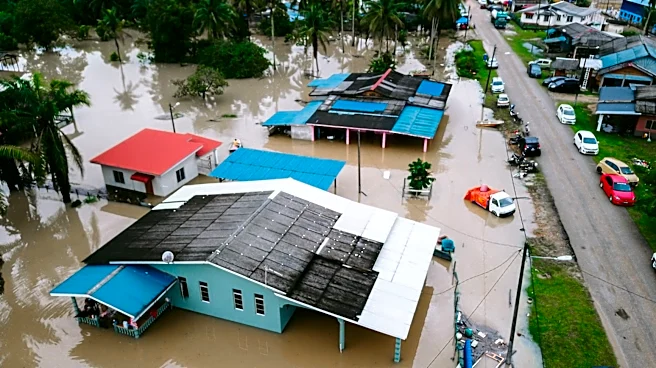
Climate change is increasingly affecting social connections within communities, as severe storms, heat waves, and wildfires disrupt social activities and gatherings. These extreme weather events can lead to the cancellation of community events, keeping
people indoors and isolated. The article highlights how social connections are vital for individual and collective well-being, providing support and information during emergencies. However, the increasing frequency of extreme weather is weakening these social ties by interrupting routines, damaging gathering places, and impairing communication. Power outages during such events can further isolate individuals by cutting off communication channels. The article emphasizes the importance of community hubs, like public libraries, which can serve as cooling shelters and climate resilience hubs, helping to maintain social connections during climate disruptions.
Why It's Important?
The disruption of social connections due to climate change has significant implications for community resilience and individual well-being. Social ties are crucial for sharing information, providing mutual aid, and coordinating responses during emergencies. As climate change exacerbates the loneliness epidemic, it poses a threat to the social fabric that helps communities thrive. The weakening of social connections can lead to increased isolation, particularly for vulnerable populations such as older adults and those in rural areas. Investing in community hubs and creating new gathering spaces can help mitigate these effects by fostering social connections and providing resources during extreme weather events. This approach not only enhances community resilience but also supports efforts to adapt to a changing climate.
What's Next?
Communities may need to prioritize the development of infrastructure that supports social connections and resilience in the face of climate change. This could involve expanding the role of public spaces as community hubs and ensuring they are equipped to serve as cooling shelters and resource centers during extreme weather events. Policymakers and community leaders might focus on creating inclusive spaces that facilitate lifelong learning and social interaction, thereby strengthening community ties. Additionally, there may be a push for increased public awareness and education on the importance of social connections in climate resilience, encouraging individuals to engage in community-building activities and support networks.