
What's Happening?
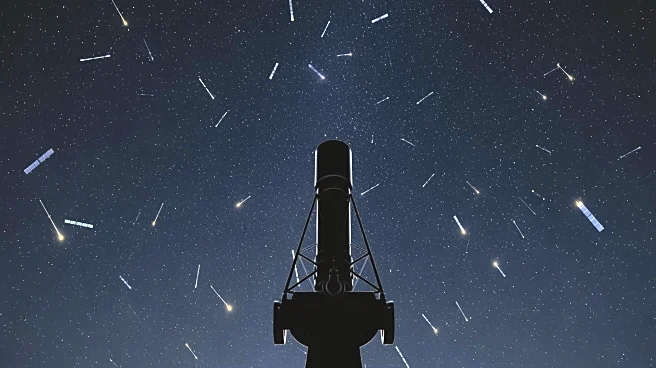
NASA astronomers have raised concerns about the potential contamination of space telescope images due to the increasing number of satellites in Earth's orbit. Since 2019, the number of satellites has increased
from approximately 2,000 to 15,000, largely due to the Starlink internet constellation. A study published in Nature estimates that if all planned satellites are launched, there could be 560,000 satellites by the 2030s. This poses a significant threat to space telescopes, as reflected light from these satellites could affect up to 96% of images taken by certain telescopes, including NASA's SPHEREx and the European Space Agency's planned ARRAKIHS. The Hubble Space Telescope could see a third of its images impacted. The study suggests that deploying satellites at lower altitudes might mitigate the issue, but this could harm the ozone layer. The simplest solution might be to launch fewer satellites, though this is unlikely due to competition and the growing demands of artificial intelligence.
Why It's Important?
The potential contamination of space telescope images has significant implications for scientific research and space exploration. Space telescopes are crucial for observing distant celestial objects and phenomena, and any interference could hinder discoveries and the monitoring of potentially hazardous asteroids. The increasing number of satellites, driven by the demand for global internet coverage and data processing capabilities, poses a challenge to maintaining clear skies for astronomical observations. This situation highlights the need for international cooperation and regulation to balance technological advancement with the preservation of scientific research capabilities.
What's Next?
As the number of satellites continues to grow, stakeholders in the space industry may need to collaborate on solutions to minimize light pollution. This could involve sharing satellite location data with telescope operators or developing new technologies to filter out satellite interference. Regulatory bodies might also consider imposing limits on satellite launches or encouraging the development of less intrusive satellite designs. The ongoing competition among satellite internet providers and the demands of artificial intelligence will likely drive further discussions on how to manage the increasing satellite population responsibly.
Beyond the Headlines
The issue of satellite light pollution extends beyond scientific research, touching on ethical and environmental concerns. The potential depletion of the ozone layer from lower-altitude satellite deployments raises environmental alarms. Additionally, the visual impact of bright satellites on the night sky could affect cultural and recreational activities related to stargazing. This situation underscores the broader implications of technological progress and the need for sustainable practices in space exploration and satellite deployment.