




What's Happening?
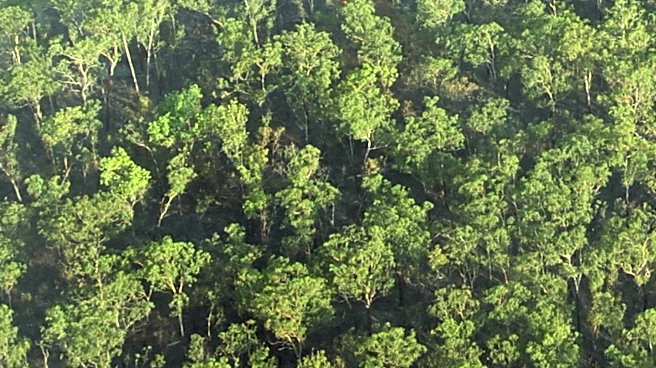
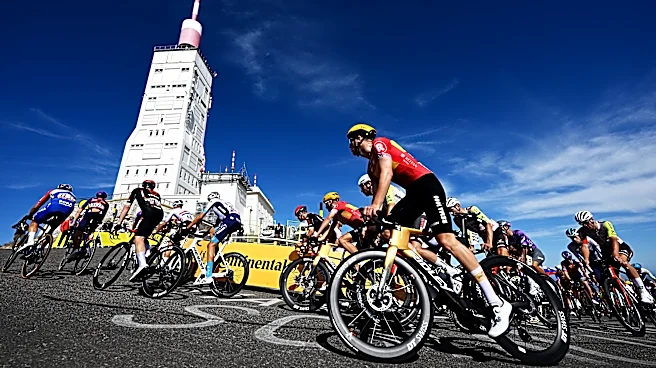
A forest fire in southwestern France has led officials to close the third stage of the Tour de France to the public. The fire, which has already ravaged over 1,600 hectares, is located approximately 60 kilometers from the finish line in Les Angles. Despite
the fire, the race route will remain unchanged, and cyclists will proceed autonomously with only essential staff. The Tour's publicity caravan will not enter France for this stage, having started in Spain. The decision to close the stage to the public was made to allow security forces to focus on combating the fire. The fire has prompted the deployment of 750 firefighters, 200 vehicles, and nine water-bombing aircraft. No fatalities have been reported, but two individuals, including a firefighter, are in critical condition. The fire is part of a series of blazes across Europe, exacerbated by extreme heat.
Why It's Important?
The closure of the Tour de France's third stage to the public highlights the severe impact of wildfires on major international events. This decision underscores the growing challenges posed by climate-related disasters, which can disrupt significant sporting events and affect local economies reliant on tourism. The safety measures taken reflect the increasing need for event organizers to adapt to environmental conditions. The situation also emphasizes the strain on emergency services, which must balance public safety with firefighting efforts. The incident serves as a reminder of the broader implications of climate change, as extreme weather events become more frequent and intense, affecting various sectors including sports, tourism, and public safety.
What's Next?
Officials will continue to monitor the fire's progression and its impact on the Tour de France. The race director has indicated that the route could be adapted if necessary, depending on the fire's development. Emergency services will remain focused on containing the fire and preventing it from spreading to more populated or difficult-to-reach areas. The situation may prompt further discussions on how to manage large-scale events in the face of environmental challenges. Additionally, the incident could lead to increased scrutiny of fire prevention measures and emergency response strategies in regions prone to wildfires.