
What's Happening?
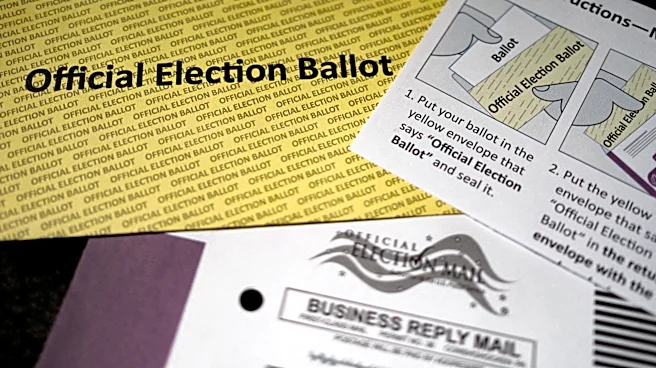
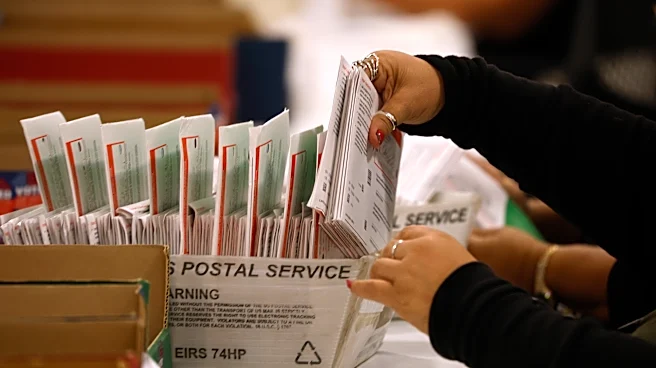
A new system implemented by the United States Postal Service (USPS) for screening mail-in ballots for the upcoming November midterm elections is facing scrutiny and warnings from a whistleblower and US Senator
Richard Blumenthal. The system, known as the 'Federal Ballot Mail Portal,' was developed in response to a March executive order by President Trump aimed at tightening federal control over mail-in voting. This order directs USPS to verify ballots against a federally approved voter list, a departure from its traditional role. According to the whistleblower, the system was developed in approximately three months, a process that would typically require nearly a year, and was not fully assembled for testing until late August. A critical flaw highlighted is its 'zero percent failure rate,' meaning a single mismatched scan can lead to the rejection of an entire batch of ballots, potentially affecting tens of thousands. Senator Blumenthal, the top Democrat on the US Senate’s permanent subcommittee on investigations, has expressed concerns that the USPS 'lacks the technical or operational capability' to safely implement the system before ballots are sent to voters, describing the project as 'perilously rushed and potentially unlawful.'
Why It's Important?
This new mail-in ballot screening system carries significant implications for the integrity and accessibility of the U.S. electoral process. With approximately one-third of voters casting ballots by mail in 2024, any systemic flaw could lead to widespread disenfranchisement. The 'zero percent failure rate' design, as described by the whistleblower, introduces a high risk of rejecting legitimate ballots due to minor scanning errors, rather than issues with voter eligibility. This could disproportionately affect certain demographics or regions, leading to accusations of voter suppression and undermining public confidence in election results. Furthermore, the rapid development and alleged lack of thorough testing raise questions about the system's reliability and security. The executive order itself has been a subject of legal challenges, with courts repeatedly blocking and unblocking parts of it, highlighting ongoing constitutional debates about federal versus state control over elections. The potential for mass disruption could ignite further political polarization and legal battles, especially in closely contested elections, making the upcoming midterms a critical test for this new federal intervention in mail-in voting.
What's Next?
Senator Blumenthal has given the USPS until September 4 to respond to questions regarding the system's implementation and until September 8 to provide internal records. These deadlines will likely trigger further disclosures and potentially intensify the political and legal debate surrounding the 'Federal Ballot Mail Portal.' The USPS's response, or lack thereof, will be crucial in determining the next steps, which could include further congressional investigations, additional lawsuits, or calls for the system's suspension. Major stakeholders, including civil rights organizations, voting rights advocates, and political parties, are expected to closely monitor the system's rollout and any reported issues. Depending on the outcomes of the initial ballot screenings and any subsequent rejections, there could be immediate legal challenges seeking injunctions or modifications to the system. The representative Robert Garcia, top Democrat on the House oversight committee, has also indicated his panel received similar reports, suggesting a bipartisan concern or at least a broader congressional interest in the matter. The ultimate fate of the system and its impact on the November elections will depend on these ongoing investigations, legal challenges, and the USPS's ability to address the raised concerns.
Beyond the Headlines
The controversy surrounding the 'Federal Ballot Mail Portal' extends beyond immediate electoral concerns, touching upon fundamental questions of federalism, technological readiness in government, and the evolving landscape of voting rights. The executive order by President Trump, which initiated this system, represents a significant shift towards federal oversight in an area traditionally managed by states, potentially setting a precedent for future federal interventions in state-run elections. The alleged rushed development and the 'zero percent failure rate' highlight a broader issue of implementing complex technological solutions in critical public services without adequate testing and safeguards. This situation could fuel public distrust in government agencies' ability to manage sensitive operations, especially when political motivations are perceived to be at play. Ethically, the potential for legitimate ballots to be rejected due to technical glitches raises concerns about the right to vote and equal access to the democratic process. The long-term implications could include a re-evaluation of the balance of power between federal and state governments in election administration, increased scrutiny of government technology projects, and a renewed focus on ensuring robust, secure, and accessible voting methods for all citizens.