






What's Happening?
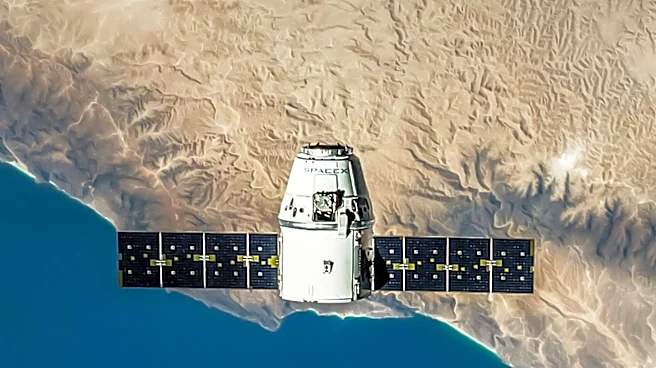
Researchers from Mount Sinai, in collaboration with NASA and aerospace company Space Tango, have launched miniature organs into space for the first time. These 'mini-organs,' including hearts and brains, were sent aboard the commercial resupply mission
CRS-35 from Cape Canaveral Space Force Station in Florida, destined for the International Space Station (ISS). The objective is to expose these organ models to the increased radiation and microgravity conditions experienced by astronauts during long-duration space missions. This initiative aims to understand how spaceflight impacts various organs and contributes to accelerated aging. The mini-hearts, developed by Mount Sinai's Cardiovascular Research Institute, will test responses to electrical signals and near-zero gravity, building on previous research that confirmed the survival of individual heart cells in weightless environments. Similarly, miBrains, which are pepper-corn sized models of healthy and diseased brains, will be observed to understand their response to the space environment and the mechanisms behind accelerated aging.
Why It's Important?
This research holds significant implications for both space exploration and terrestrial healthcare. For future space missions, particularly those involving extended stays on the Moon or Mars, understanding the effects of microgravity and radiation on human organs is crucial for ensuring astronaut health and developing countermeasures. The accelerated aging observed in space—where six months can equate to 10 to 20 years of aging on Earth—provides a unique model for studying age-related diseases. Discoveries made in this microgravity environment can offer insights into conditions like Parkinson's and Alzheimer's disease, which are difficult to simulate on Earth. The ability to study these processes in a compressed timeframe could lead to faster development of treatments and interventions for a wide range of human ailments, benefiting people on Earth by advancing medical understanding and therapeutic strategies.
What's Next?
The mini-organs are expected to arrive at the International Space Station shortly after their launch. Once on the ISS, researchers will monitor their responses to the space environment, observing how they react to electrical signals and the effects of microgravity and radiation. This initial phase of research will serve as a starting point for further investigations into the biological impacts of spaceflight. NASA plans to continue these types of experiments as it prepares for future missions, including returning astronauts to the Moon by 2028 and establishing a permanent lunar base within the next decade, with long-term goals of sending humans to Mars. The data collected from these mini-organ experiments will inform the development of strategies to protect astronauts' health during these ambitious endeavors and potentially translate into new medical advancements for Earth-bound patients.
Beyond the Headlines
The use of mini-organs in space represents a significant leap in biomedical research, offering an ethical and practical alternative to traditional animal testing or human trials for studying complex biological processes. The 'CubeLab' technology, a fully automated, miniaturized system developed by Space Tango, exemplifies how technological innovation is enabling sophisticated scientific experiments in extreme environments. This approach not only accelerates the pace of discovery by simulating aging and disease progression more rapidly but also opens new avenues for understanding fundamental biological mechanisms. The collaboration between academic institutions like Mount Sinai, government agencies like NASA, and private companies like Space Tango highlights a growing trend of interdisciplinary partnerships driving scientific progress. This research could fundamentally alter our understanding of human physiology and disease, with potential long-term impacts on personalized medicine and regenerative therapies.