



What's Happening?
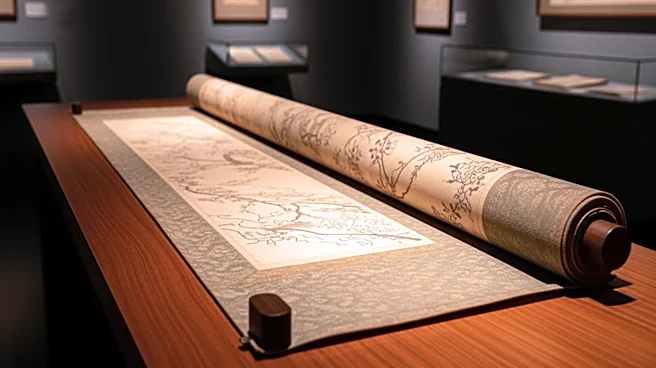
The Yale Center for British Art in New Haven, Connecticut, is showcasing a monumental 37ft-long Indian scroll known as the Lucknow scroll. This early 19th-century artifact, created between 1821 and 1826, is being displayed publicly for the first time
following two years of conservation work. The scroll, which depicts an expansive view of Lucknow in northern India, is part of the exhibition 'Painters, Ports and Profits: Artists and the East India Company, 1750-1850'. Due to its size and fragility, the scroll will be exhibited in portions, allowing different sections to be viewed over time. The scroll was made during the reign of Ghazi-ud-Din Haidar Shah, who declared independence from the Mughal emperor in 1819. It captures various architectural and cultural elements of the time, including palaces, mosques, and workshops.
Why It's Important?
The exhibition of the Lucknow scroll at Yale highlights the intersection of art, history, and colonial commerce. It provides insight into the cultural and political landscape of early 19th-century India, a period marked by significant architectural and political changes. The scroll's display also underscores the importance of conservation in preserving historical artifacts, allowing contemporary audiences to engage with and learn from the past. This exhibition not only enriches the cultural offerings of the Yale Center for British Art but also contributes to broader discussions about the legacy of colonialism and the role of art in documenting historical narratives.
What's Next?
As the exhibition continues until June 21, 2026, visitors will have the opportunity to view different sections of the scroll as it is gradually unrolled. This approach not only protects the artifact from light exposure but also encourages repeat visits, fostering ongoing public engagement. The exhibition may prompt further scholarly research into the scroll's origins and its historical context, potentially leading to new insights into the cultural exchanges between India and Britain during the colonial period.
Beyond the Headlines
The Lucknow scroll's exhibition raises questions about the provenance and patronage of such artifacts, as the identities of the artists and patrons remain unknown. This mystery adds a layer of intrigue and highlights the complexities of historical documentation and artistic production in colonial contexts. The scroll's conservation also reveals the technical challenges involved in preserving delicate historical objects, emphasizing the role of modern conservation techniques in safeguarding cultural heritage.