







What's Happening?
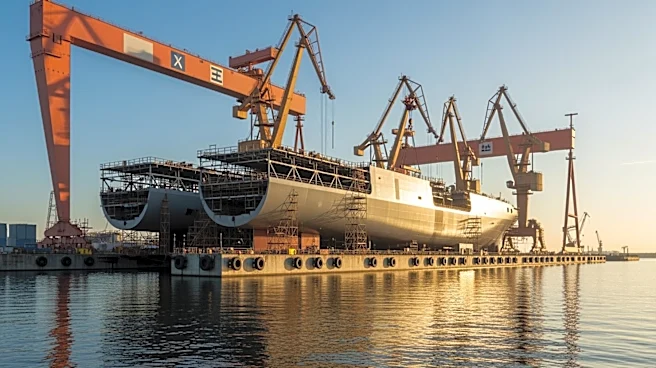
Davie Defense has initiated a $1 billion modernization project at Gulf Copper's shipyards in Port Arthur and Galveston, Texas. This effort is part of Davie's strategy to compete for government shipbuilding contracts, specifically to construct Arctic Security
Cutters for the U.S. Coast Guard. The inauguration event was attended by Texas Governor Greg Abbott, White House budget chief Russ Vought, Sen. Ted Cruz, and Coast Guard Commandant Adm. Kevin Lunday. The project aims to enhance the shipyards' capabilities, marking one of the largest investments in American shipbuilding capacity in recent years. Davie Defense plans to create 2,400 new jobs and support 7,000 jobs throughout Texas. The company will build two hulls at Helsinki Shipyard and three more at Gulf Copper, with the first Finnish hull expected to deliver in 2028 and the last Texan hull in 2035.
Why It's Important?
The modernization of Gulf Copper's shipyards is significant for several reasons. It addresses the urgent need for more ships to defend American sovereignty, particularly in the strategically important Arctic region. The investment is expected to boost local economies by creating thousands of jobs and supporting existing ones. Texas' favorable business environment and skilled workforce were key factors in Davie's decision to locate its operations in the state. This project also highlights the growing importance of the Arctic as a strategic theater, necessitating enhanced maritime capabilities. The initiative reflects a broader trend of increasing investments in U.S. shipbuilding to meet national security demands.
What's Next?
Davie Defense will proceed with the construction of Arctic Security Cutters, with the first hulls expected to be delivered by 2028. The company will continue to develop its shipyard capabilities to meet the demands of the U.S. Coast Guard's procurement plan, which calls for a total of 11 vessels. Final contracts for additional hulls are anticipated soon, involving other shipbuilders like Rauma Marine Constructions and Bollinger. Stakeholders, including government officials and industry leaders, will likely monitor the project's progress closely, given its implications for national security and economic development.
Beyond the Headlines
The project underscores the strategic importance of the Arctic region, which is increasingly viewed as a critical area for national defense. The investment in shipbuilding capacity may also influence future policy decisions regarding maritime security and Arctic exploration. Additionally, the collaboration between U.S. and international shipyards, such as Helsinki Shipyard, highlights the global nature of defense procurement and the need for international partnerships in addressing security challenges.