






What's Happening?
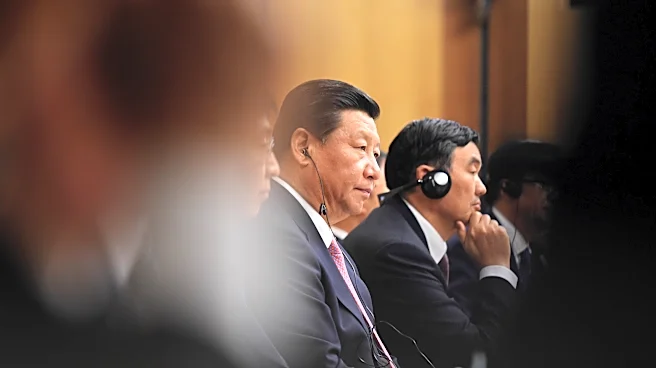
Somalia's Minister of Information, Culture and Tourism, Abdifatah Qasim Mohamud, addressed the 7th World Media Summit in Beijing, China, calling for enhanced international cooperation to ensure artificial intelligence (AI) supports reliable information,
professional journalism, and public trust in media. Minister Mohamud urged summit participants to translate agreements into practical initiatives aimed at strengthening journalists' skills, expanding access to technology, and upholding professional media ethics. The summit's primary focus was on the impact of AI on the media industry and strategies for international collaboration to ensure technological advancements promote access to credible information and bolster public confidence in news organizations. Abdifatah emphasized that accuracy in reporting and editorial responsibility must remain central to the media industry's transformation, especially as AI increasingly influences information production, distribution, and access. He also highlighted Somalia's readiness for international partnerships focused on knowledge-sharing, information verification, and implementing projects with measurable outcomes, while thanking the Chinese government and Xinhua News Agency for hosting the event.
Why It's Important?
The call for responsible AI use in media by Somalia's Information Minister underscores a growing global concern about the integrity of information in the age of artificial intelligence. This initiative is crucial for maintaining public trust in news organizations, which is vital for informed societies and democratic processes. As AI tools become more sophisticated and integrated into news production and dissemination, the potential for misinformation and disinformation also increases. By advocating for international cooperation, Somalia is contributing to a global dialogue aimed at establishing ethical guidelines and best practices for AI in journalism. This effort can help prevent the erosion of journalistic standards and ensure that AI serves as a tool to enhance, rather than undermine, the quality and credibility of news. The emphasis on skills development and technological access for journalists is also critical, as it empowers media professionals to leverage AI effectively while adhering to ethical principles, thereby fostering a more resilient and trustworthy global media landscape.
What's Next?
Following Minister Mohamud's address, the immediate next steps involve the translation of the summit's agreements into actionable initiatives. This will likely include the development of international frameworks or guidelines for AI use in media, fostering partnerships for journalist training programs, and facilitating technology transfer to media organizations in developing countries. Stakeholders, including international media organizations, technology companies, and governments, are expected to engage in further discussions to define concrete projects and collaborations. There may be a push for pilot programs in countries like Somalia to test and implement responsible AI practices in newsrooms. Additionally, ongoing dialogues at future international forums will likely continue to refine these strategies, focusing on monitoring the impact of AI on media ethics and public trust. The emphasis on knowledge-sharing and information verification suggests a future where collaborative platforms could be established to combat AI-driven misinformation.
Beyond the Headlines
The discussions initiated by Somalia's Information Minister extend beyond immediate media practices, touching upon broader implications for digital sovereignty and cultural preservation. In an AI-driven information ecosystem, countries risk losing control over their narratives if they do not actively shape the development and application of these technologies. By advocating for responsible AI, Somalia is implicitly asserting the importance of diverse voices and perspectives in the global information space, preventing a monopolization of AI-generated content by a few dominant players. Furthermore, the focus on professional journalism and public trust highlights the ethical imperative to ensure AI tools are developed with human values at their core, rather than solely for efficiency or profit. This also raises questions about the role of AI in preserving linguistic and cultural diversity in media, ensuring that AI models are not biased towards dominant languages or cultural norms, and instead support a rich tapestry of global expression.