






What's Happening?
Scott Allison, an electric vehicle (EV) driver, recently embarked on a six-day road trip across Nevada, opting for a longer route through California to ensure access to charging stations. This decision highlights the challenges faced by EV drivers in Nevada, where
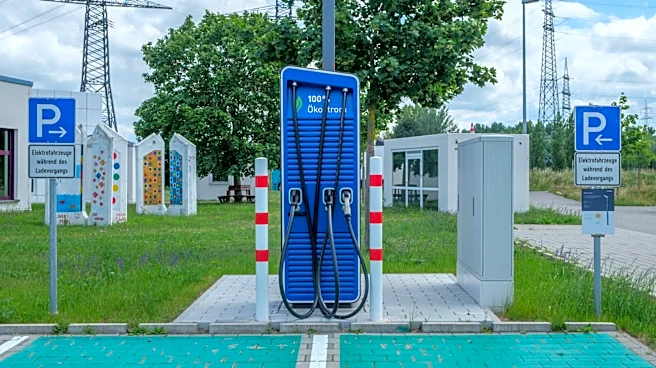
charging infrastructure is sparse, particularly in rural areas. Allison's journey bypassed Nevada's Highway 95 in favor of California's Highway 395, which offers more frequent charging options. The Nevada Department of Motor Vehicles reports over 90,000 registered EVs in the state, but the charging network has not kept pace with this growth. The issue is exacerbated by Nevada's geography, with long stretches of highway and limited charging stations, some of which are unreliable or non-operational.
Why It's Important?
The challenges faced by EV drivers in Nevada underscore a significant barrier to the widespread adoption of electric vehicles, particularly in rural areas. As more drivers switch to EVs, the lack of reliable charging infrastructure could hinder tourism, a major industry in Nevada, as visitors may struggle to travel across the state. This situation also highlights the broader issue of infrastructure development lagging behind technological adoption, which could impact economic growth and environmental goals. Assemblymember Howard Watts emphasizes the need for improved infrastructure to support both residents and tourists, while advocates argue that modern EVs are capable of long-distance travel if supported by adequate charging facilities.
What's Next?
Addressing the charging infrastructure gap in Nevada will require coordinated efforts from state officials, businesses, and federal agencies. The loss of over $12 million in federal funding for charging infrastructure expansion presents a challenge, but it also underscores the need for alternative solutions and investments. As electric vehicle adoption continues to rise, stakeholders may push for increased funding and policy changes to support infrastructure development. Additionally, public awareness campaigns could help educate potential EV buyers about the current capabilities and benefits of electric vehicles, potentially driving further adoption and investment in charging networks.