




What's Happening?
The United States, alongside European nations and Japan, is advising households to assemble emergency stockpiles. This guidance is a response to various uncertainties, including natural disasters, man-made incidents, and potential social upheaval. U.S.
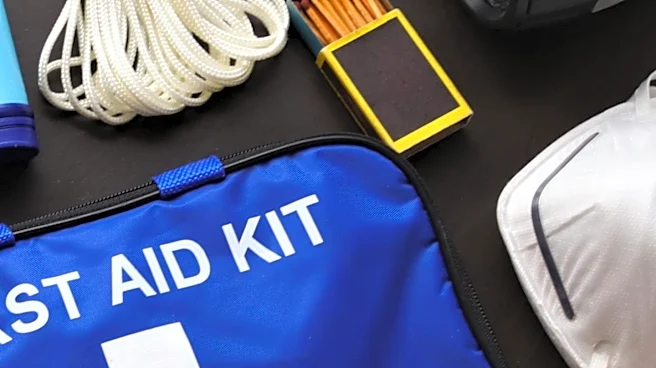
civilian recommendations suggest preparing for several days, while other countries recommend readiness for 72 hours to two weeks. Essential items for these stockpiles include water (three liters per person per day), non-perishable foods like canned goods and dried fruits, and crucial equipment such as power banks, charging cables, and battery-powered radios. Medical supplies, including prescribed medications and first-aid kits, are also emphasized. Additionally, personal hygiene products, cash in small denominations, and copies of important documents are advised. Specific regional needs, such as warm clothing in colder areas or pet supplies, should also be considered. The UK's updated 'Be Ready' campaign and Japan's call for preparedness due to megaquake concerns highlight the global nature of this initiative.
Why It's Important?
This widespread call for emergency preparedness underscores a growing recognition among governments of the increasing fragility of global systems and the potential for disruptions. For U.S. households, it signifies a shift towards individual responsibility in disaster response, acknowledging that emergency services may be overwhelmed in large-scale events. The emphasis on self-sufficiency for several days or weeks highlights vulnerabilities in infrastructure and supply chains. Economically, this could stimulate demand for emergency supplies, impacting retail and manufacturing sectors. For individuals, it promotes resilience and reduces reliance on immediate government aid, potentially mitigating the severity of crises. However, it also places a burden on households to invest in these provisions, which could disproportionately affect lower-income families. The initiative reflects a proactive approach to national security, extending beyond traditional military defense to include civilian readiness against a broader spectrum of threats.
What's Next?
Households are expected to gradually build their emergency kits, rotating food and medicine supplies to ensure freshness. Governments will likely continue to update and disseminate preparedness guidelines, potentially through public awareness campaigns. There may be increased scrutiny on supply chain resilience and local emergency response capabilities. Businesses specializing in emergency preparedness products could see sustained growth. The long-term impact could include a more resilient populace better equipped to handle unforeseen events, but also a continued debate on the balance between individual responsibility and government provision in times of crisis. The ongoing geopolitical landscape and climate-related events will likely keep this issue at the forefront of public safety discussions.
Beyond the Headlines
The push for household emergency stockpiles reflects a deeper societal anxiety about stability and security in an increasingly complex world. Beyond immediate disaster response, it touches upon themes of self-reliance, community resilience, and the evolving social contract between citizens and their governments. The 'axis of upheaval' mentioned in broader geopolitical discussions suggests a recognition of interconnected global challenges, from climate change to geopolitical tensions, that could trigger widespread disruptions. This initiative, therefore, is not just about physical preparedness but also about psychological readiness for a future characterized by greater uncertainty. It implicitly acknowledges that traditional safety nets may not always be sufficient, prompting a re-evaluation of individual and collective responsibilities in safeguarding well-being.