


What's Happening?
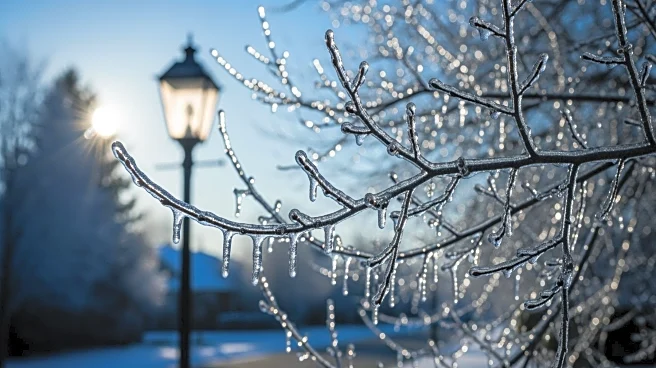
In Lexington, Kentucky, city officials and residents are calling for a better response to ice storms following the recent Winter Storm Fern. The storm left significant ice and snow accumulation, blocking major roadways and neighborhood streets. Mayor
Linda Gorton and Nancy Albright, the commissioner of environmental quality and public works, have acknowledged the need to revise the city's winter plan to address ice storms more effectively. During a recent Urban County Council meeting, members expressed frustration over the city's handling of the storm, emphasizing the increasing frequency of severe weather events. The council discussed the necessity of updating strategic plans to better manage such weather conditions in the future.
Why It's Important?
The call for improved response to ice storms in Lexington highlights the growing challenge of adapting to more frequent and severe weather events. Effective management of ice storms is crucial for maintaining public safety, ensuring accessibility, and minimizing economic disruptions. The city's ability to clear roads and maintain essential services directly impacts residents' daily lives and the local economy. As severe weather becomes more common, cities like Lexington must invest in infrastructure and resources to enhance their resilience and preparedness. This situation underscores the broader need for municipalities to adapt to changing climate patterns and prioritize sustainable urban planning.
What's Next?
Lexington officials plan to revise the city's winter response strategy, focusing on better preparation for ice storms. This includes evaluating resource allocation, such as purchasing additional equipment and hiring more staff for snow and ice removal. The city council will consider budgetary implications and investment strategies to enhance the winter response plan. As discussions continue, the city aims to balance immediate needs with long-term planning to ensure effective management of future weather events. The outcome of these deliberations will likely influence how Lexington and similar cities approach climate adaptation and infrastructure resilience.