







What's Happening?
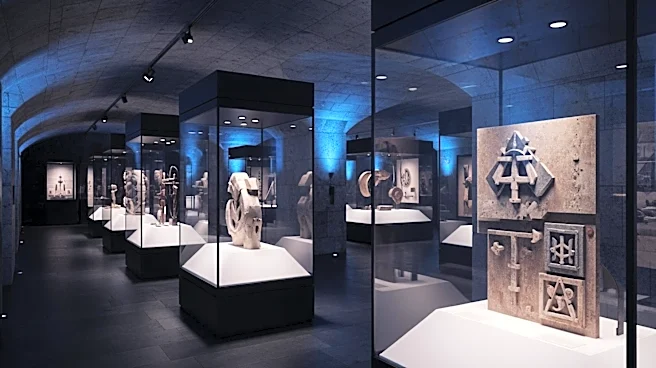
The National Park Service is set to open a new underground exhibit space at the Lincoln Memorial, which has been hidden for over a century. This new museum experience, located in the undercroft of the memorial, will feature approximately 15,000 square
feet of exhibit space. The project, costing nearly $69 million, is funded through a combination of federal funding and private donations, including a significant contribution from philanthropist David Rubenstein. The exhibit aims to provide visitors with a deeper understanding of the memorial's symbolism and historical significance, featuring multimedia projections and glass viewing areas. The Lincoln Memorial, since its opening in 1922, has been a significant site for public expression and historical events, such as Marian Anderson's 1939 performance and Martin Luther King Jr.'s 1963 'I Have a Dream' speech.
Why It's Important?
The opening of this underground exhibit at the Lincoln Memorial is significant as it enhances the educational and historical value of one of America's most iconic landmarks. By providing a deeper insight into the memorial's construction and its role in American history, the exhibit is expected to attract more visitors and enrich their experience. This development also underscores the importance of preserving and interpreting historical sites for future generations. The project reflects a broader effort to engage the public with American history and the values represented by the memorial, such as freedom and equality. The investment in this project highlights the ongoing commitment to maintaining and enhancing national monuments.
What's Next?
The new exhibit is scheduled to open to the public on June 25, with timed-entry tickets available online. The National Park Service anticipates a strong public interest, given the historical significance of the Lincoln Memorial. As the United States approaches its 250th anniversary, this exhibit is expected to play a key role in commemorating the nation's history. The success of this project could lead to similar initiatives at other national landmarks, further promoting historical education and tourism. Stakeholders, including historians and educators, may engage in discussions about the exhibit's content and its impact on public understanding of American history.