






What's Happening?
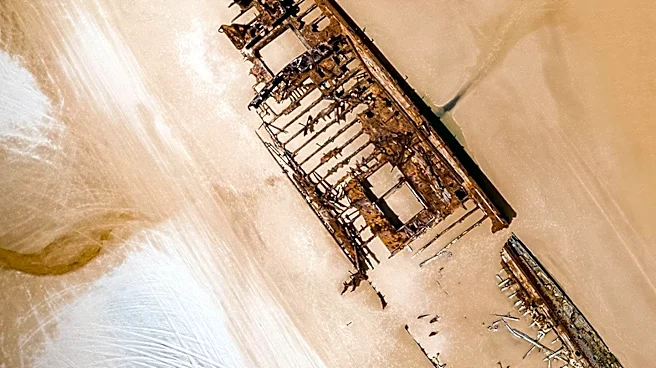
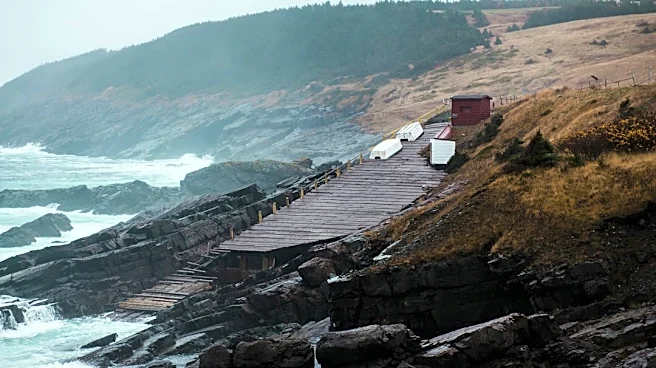
During a recent nor'easter, strong winds, heavy rain, and coastal erosion along the Massachusetts shore led to the discovery of what is believed to be the remains of an 1884 shipwreck. Pieces of wood, identified as potentially belonging to the schooner
'Warren Sawyer,' washed ashore. The 'Warren Sawyer' was a vessel that reportedly carried cotton and scrap iron from New Orleans to Boston. On December 22, 1884, it was blown off course by gale-force winds, leading to its wreck. Historical accounts indicate that the crew members were successfully rescued by lifesavers at the time of the incident. The discovery was made along Nantucket island's south shore on a Saturday, following the severe weather conditions.
Why It's Important?
The emergence of the 'Warren Sawyer' shipwreck offers a tangible link to 19th-century maritime history and the challenges faced by seafaring trade along the U.S. coast. This discovery provides valuable insights into historical shipping routes, vessel construction, and the impact of severe weather events on coastal communities and commerce during that era. For historians and archaeologists, it presents a unique opportunity to study a well-documented vessel and potentially recover artifacts that can shed light on daily life aboard such ships and the nature of their cargo. Furthermore, it highlights the dynamic nature of coastal environments and how natural processes like erosion can reveal hidden historical treasures, contributing to a deeper understanding of the region's past and its connection to broader national economic activities.
What's Next?
Following the discovery, officials and historical preservation groups are expected to assess the shipwreck's remains. This will likely involve archaeological surveys to confirm the vessel's identity and determine the extent of its preservation. Efforts may be made to document, recover, and conserve any significant artifacts found. The site will also be monitored for further erosion or exposure of additional wreckage. Public awareness campaigns might be launched to educate the community about the historical significance of the 'Warren Sawyer' and the importance of preserving maritime heritage. Decisions regarding the long-term management of the site, including potential excavation or protection measures, will depend on the findings of initial assessments and the involvement of relevant state and federal agencies.
Beyond the Headlines
This discovery transcends a mere historical find; it underscores the profound and often hidden layers of history embedded within the natural landscape. The 'Warren Sawyer' serves as a poignant reminder of the inherent risks of maritime trade and the resilience of those who navigated the treacherous waters of the past. It also brings to light the ongoing dialogue between human history and natural forces, where the ocean, a powerful agent of change, can both conceal and reveal stories from centuries ago. The event prompts reflection on how environmental shifts, such as increased storm intensity or coastal erosion, can unexpectedly bring historical narratives to the surface, challenging contemporary society to engage with and protect these emerging fragments of the past.