





What's Happening?
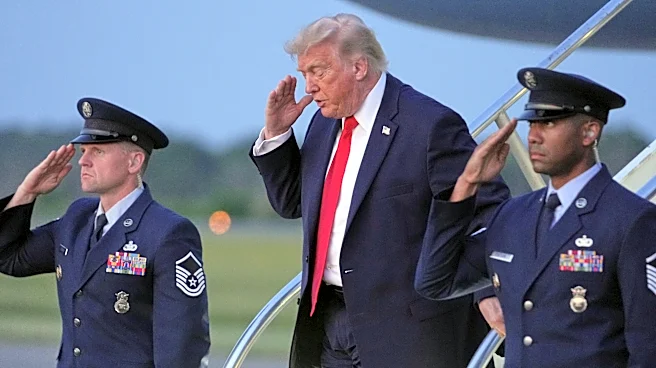
Lindsey Graham, a four-term incumbent senator from South Carolina, has entered the Republican primary with the endorsement of President Trump. Despite being a Senate institutionalist and an Iran hawk, which contrasts with the 'America First' ideology,
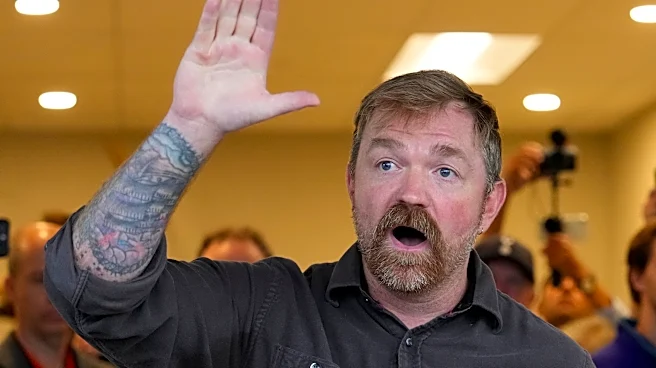
Graham appears poised for another victory. His main Republican challenger, Mark Lynch, who brands himself as an 'America First' candidate, has been labeled by Trump as a 'lunatic' and a 'disaster' for the party. This situation highlights a divergence from the fate of John Cornyn, another senator who failed to secure Trump's endorsement and lost his seat in Texas. Graham's relationship with Trump, including being a political confidant and regular golfing partner, has seemingly insulated him from the MAGA movement's typical purges.
Why It's Important?
The endorsement of Lindsey Graham by President Trump underscores the complex dynamics within the Republican Party, particularly the influence of Trump's personal relationships over strict ideological alignment. Graham's ability to maintain his position despite deviations from the 'America First' agenda suggests that Trump's endorsement can override ideological purity within the MAGA movement. This development is significant as it highlights the potential for political figures to navigate the MAGA landscape by leveraging personal connections with Trump, rather than strictly adhering to the movement's ideological tenets. It also reflects the ongoing transformation of the Republican Party under Trump's influence, where loyalty to Trump can outweigh traditional conservative credentials.
What's Next?
As the primary progresses, Graham's ability to maintain his lead will be tested, particularly if his challengers consolidate support. The outcome of this primary could set a precedent for how other Republican incumbents navigate the MAGA movement's expectations. If Graham secures another term, it may encourage other Republican figures to prioritize personal alliances with Trump over strict adherence to the 'America First' ideology. Conversely, if Graham faces significant challenges, it could signal a shift towards a more ideologically driven MAGA movement. The primary results will be closely watched as an indicator of the Republican Party's future direction.
Beyond the Headlines
Graham's situation reveals a potential 'loophole' within the MAGA movement, where effectiveness and personal utility to Trump can outweigh ideological purity. This dynamic raises questions about the long-term implications for the Republican Party's identity and policy priorities. As Trump continues to wield significant influence, the balance between personal loyalty and ideological consistency will likely shape the party's evolution. Additionally, Graham's foreign policy stance, particularly on Iran, highlights the complexities of aligning traditional Republican hawkishness with the 'America First' agenda, suggesting potential areas of tension within the party.