





What's Happening?
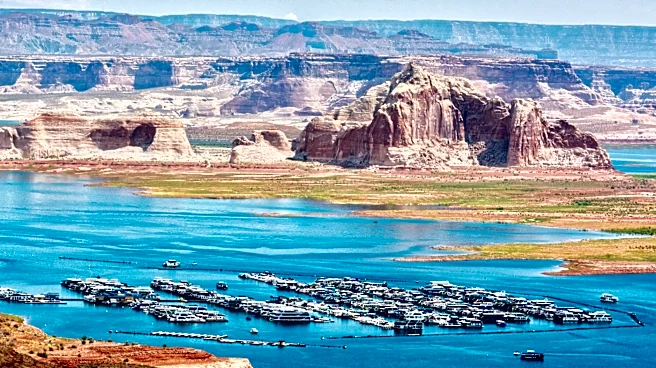
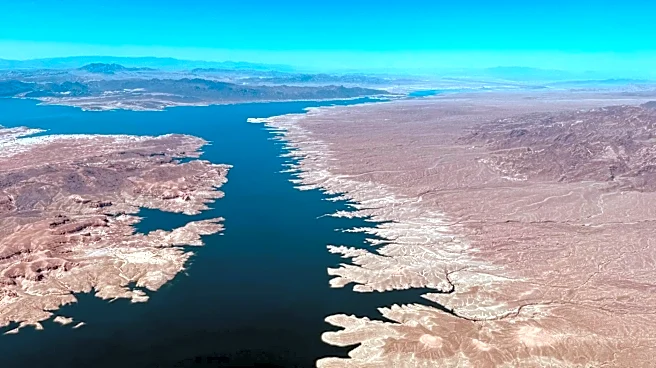
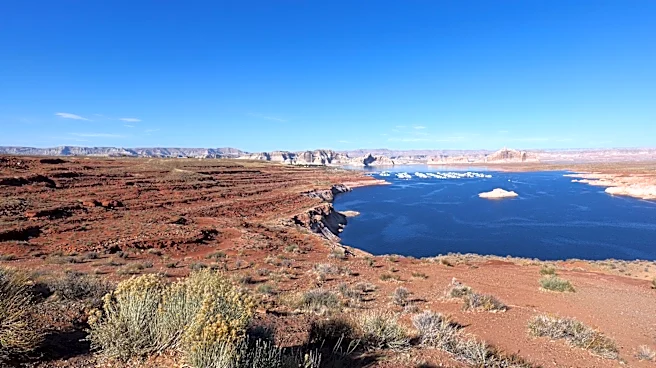
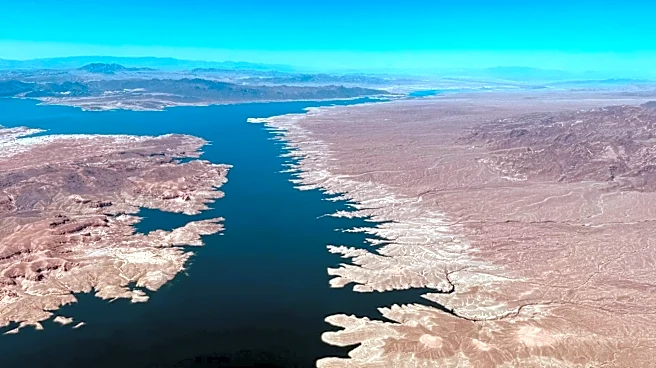
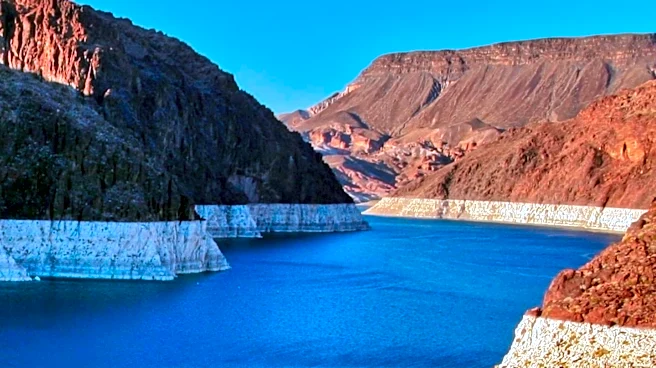
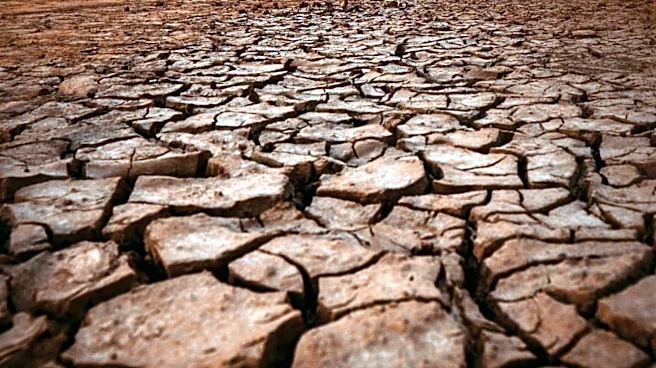
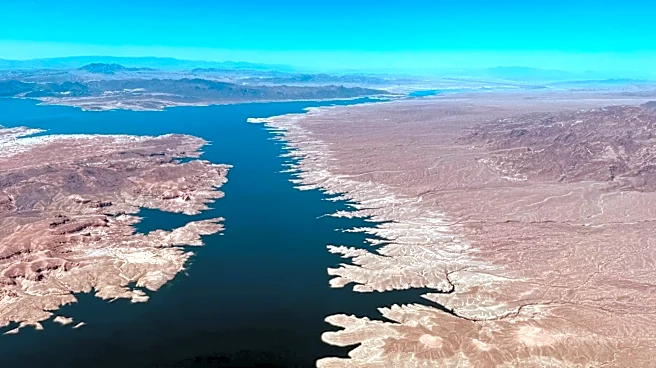
The water levels in Lake Mead and Lake Powell, two of the largest reservoirs in the United States, have reached historic lows, posing a significant threat to the water supply for millions of people. The Colorado River, which feeds these reservoirs, has
been shrinking due to increased water demand and climate change-induced drought conditions. Currently, Lake Powell is at 23% capacity, while Lake Mead is at 27%, both nearing record lows. This situation highlights the ongoing crisis in the Colorado River Basin, which supplies water to 40 million people and irrigates millions of acres of farmland.
Why It's Important?
The declining water levels in these crucial reservoirs underscore the urgent need for new water management strategies in the Colorado River Basin. The situation threatens not only water supply but also hydropower generation, which could impact electricity for hundreds of thousands of homes. The crisis calls for immediate action from state and federal authorities to develop sustainable water-sharing agreements. The ongoing drought and climate change effects exacerbate the challenges, making it imperative for stakeholders to collaborate on long-term solutions to ensure water security for the region.
What's Next?
Federal and state officials are expected to release new operating guidelines for the Colorado River in the coming weeks. These guidelines will aim to address the water-sharing challenges among the seven basin states. The situation may also prompt further negotiations and potential legal battles if consensus is not reached. Additionally, the upcoming winter's snowpack levels will be closely monitored, as they play a critical role in replenishing the reservoirs. However, experts warn that even a record snowpack may not be sufficient to resolve the crisis, emphasizing the need for comprehensive water management reforms.