
What's Happening?
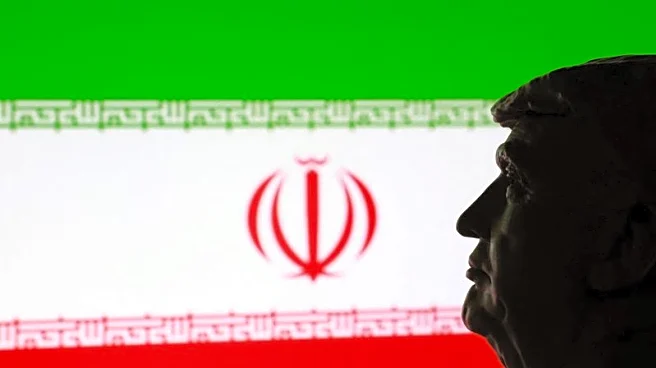
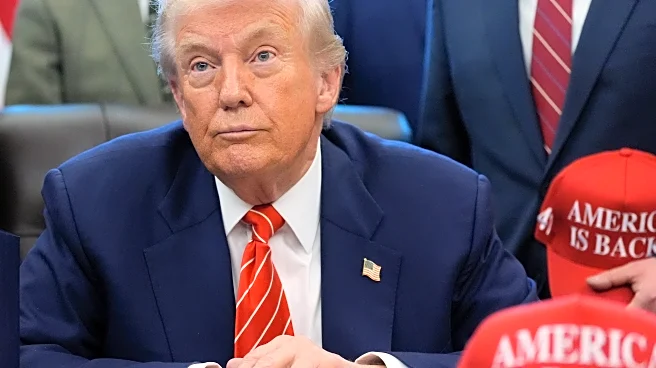
President Trump’s approach to Iran is characterized by a strategy of 'regime reorientation' rather than regime change. This strategy aims to adjust Iran's external behavior and strategic alignments to align with
American interests. Trump’s model, similar to his approach in Venezuela, involves maintaining the existing regime while curtailing its strategic autonomy, particularly in nuclear escalation, proxy warfare, and alignment with Russia and China. Economic pressure is a key tool in this strategy, with measures such as restricting Iran’s oil exports and isolating its financial system. Additionally, Trump employs gray-zone operations to degrade confidence within Iran’s regime and military force to demonstrate American reach and expose vulnerabilities. Diplomacy is used to align international partners and limit Iran’s maneuverability, increasing the effectiveness of other pressure tools.
Why It's Important?
The significance of President Trump's strategy lies in its potential impact on international relations and regional stability. By focusing on reorientation rather than regime change, the U.S. aims to limit Iran's strategic options without provoking open conflict. This approach could lead to reduced tensions in the Middle East, as Iran may be pressured to alter its behavior in ways that are less confrontational to U.S. interests. The strategy also highlights the U.S.'s ability to influence global geopolitics through economic and diplomatic means, potentially affecting Iran's relationships with other major powers like Russia and China. The approach underscores the U.S.'s commitment to maintaining its influence in the region while avoiding the pitfalls of direct military intervention or nation-building.
What's Next?
The foreseeable consequences of this strategy include continued economic pressure on Iran and diplomatic efforts to align international partners against Iran’s strategic alignments. Iran may face increasing internal pressure as its strategic autonomy is curtailed, potentially leading to shifts in its foreign policy. The U.S. is likely to continue employing gray-zone operations and military demonstrations to reinforce its position. International reactions may vary, with some countries supporting the U.S. approach while others may seek to maintain economic ties with Iran. The strategy’s success will depend on Iran’s willingness to adapt its behavior and the effectiveness of U.S. pressure in achieving desired outcomes.
Beyond the Headlines
Beyond the immediate geopolitical implications, President Trump's strategy on Iran raises ethical and legal questions about the use of economic and military pressure to influence sovereign nations. The approach challenges traditional notions of diplomacy and international relations, emphasizing coercion without ownership. This strategy could set a precedent for how the U.S. engages with other adversarial regimes, potentially influencing global norms around intervention and sovereignty. The long-term impact on U.S.-Iran relations and regional dynamics remains uncertain, as the strategy may either lead to a more stable Middle East or exacerbate existing tensions.