



What's Happening?
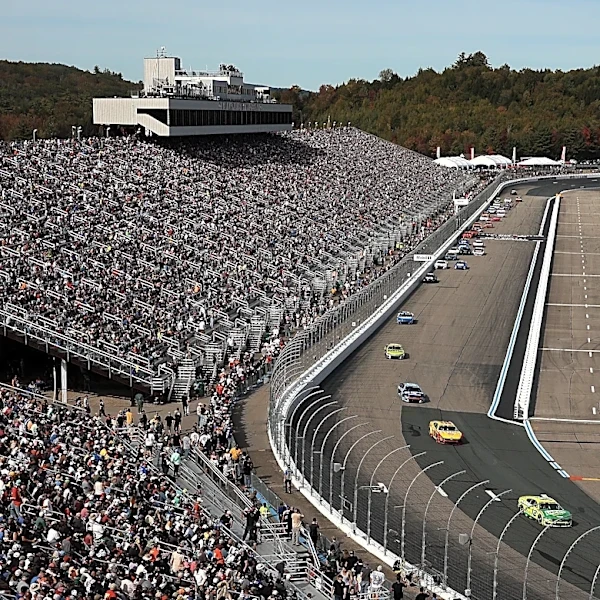
Across the United States, local racetracks are facing threats from noise and nuisance lawsuits filed by nearby property owners, leading some state legislatures to enact 'right to race' laws. These laws aim to protect existing motorsports facilities from such
complaints. The number of motorsports facilities has decreased by nearly a quarter over the past 25 years, from approximately 2,000 to 1,500, according to the Specialty Equipment Market Association (SEMA). Joshua Vadeboncoeur, who studies the racing industry at Gardner-Webb University, notes that neighborhoods have gradually moved closer to tracks, leading to increased complaints. Four states—Iowa, Kansas, North Carolina, and South Carolina—have already passed 'right to race' laws, with similar bills advancing or introduced in 12 other states. These laws are crucial for tracks like Shenandoah Speedway in Virginia, which currently lacks such protection and faces potential risks if surrounding land is developed.
Why It's Important?
The implementation of 'right to race' laws is vital for the preservation of local motorsports facilities, which serve as significant economic and social drivers in many smaller towns and rural areas. These tracks not only generate revenue for local businesses but also provide a crucial social infrastructure, offering a gathering place for communities and fostering a unique culture around racing. The closure of a track can result in substantial economic loss and the dissolution of these social communities. Furthermore, the legal costs associated with nuisance lawsuits can be prohibitive for tracks operating on narrow margins, making these protective laws essential for their continued operation. The decline in motorsports facilities also impacts the development of future racing talent, as local tracks are often where drivers begin their careers.
What's Next?
The trend of states introducing and passing 'right to race' laws is expected to continue as more communities recognize the economic and cultural importance of local racetracks. States without such legislation, like Virginia, may see increased advocacy from motorsports enthusiasts and industry groups to adopt similar protections. The ongoing challenge for racetracks will be to balance their operations with the concerns of growing residential areas, even with legal protections in place. Additionally, rising land values pose another threat, as properties may become more valuable for development than for racing, potentially leading to closures despite 'right to race' laws. Stakeholders will likely continue to seek solutions that allow tracks to thrive while addressing community concerns.
Beyond the Headlines
Beyond the immediate legal and economic implications, the 'right to race' movement touches upon broader themes of land use, community identity, and the evolving relationship between traditional recreational activities and modern residential development. It highlights a cultural clash between long-standing institutions, often seen as integral to local heritage, and the pressures of urbanization and changing demographics. The debate also raises questions about property rights and the extent to which new residents should be able to alter the established character of an area. The preservation of these tracks is not just about racing; it's about maintaining a piece of American cultural fabric and supporting the diverse forms of recreation that contribute to local economies and social cohesion.