






What's Happening?
Millard Fillmore Caldwell, Florida's twenty-ninth governor and a former chief justice of the Florida Supreme Court, passed away on October 23, 1984. His extensive career in public service included representing Santa Rosa County in the Florida House of Representatives
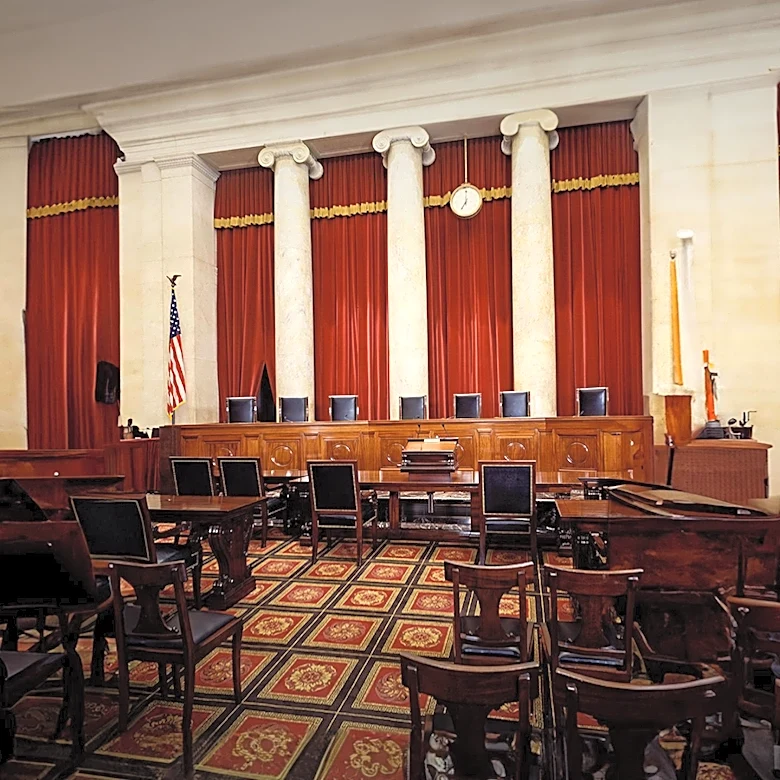
from 1929 to 1932, serving four terms in the U.S. House of Representatives from 1933 to 1941, and a four-year term as governor from 1945 to 1949. During his governorship, Florida saw increased funding for public schools and expanded state government services. He also chaired the National Governors' Conference from 1946 to 1947 and later served as administrator of the Federal Civil Defense Administration from 1950 to 1952. Caldwell was appointed to the Florida Supreme Court in 1962, becoming chief justice in 1967 before retiring in 1969. His legacy, however, is also marked by his opposition to racial progress, reflecting the prevailing racial attitudes of his era.
Why It's Important?
Millard F. Caldwell's career is significant for illustrating how one individual could hold influential positions across both the executive and judicial branches of Florida's government, as well as at the federal level. His contributions to public education and state services during his governorship had a lasting impact on Florida's development. However, the acknowledgment of his opposition to racial progress is crucial for a comprehensive understanding of his historical role. This aspect of his legacy highlights the complex and often contradictory nature of historical figures, where public achievements can coexist with views that are now widely considered discriminatory. Examining such legacies is vital for understanding the historical context of racial attitudes and their impact on policy and society, particularly in the American South. It prompts reflection on how past leaders shaped the social and political landscape, and the long-term consequences of their perspectives on civil rights.
What's Next?
While Caldwell's life and career are historical, the ongoing process of evaluating and re-evaluating historical figures and their legacies remains relevant. Educational institutions and historical organizations will continue to present his story, likely emphasizing both his public service achievements and his problematic stance on racial issues. This balanced approach is essential for fostering a nuanced understanding of history, particularly in discussions about civil rights and social justice. Future historical analyses may delve deeper into the specific policies or actions Caldwell took that reflected his opposition to racial progress, and how these contributed to the broader context of racial inequality in Florida during his time. The ongoing societal dialogue about historical figures and their impact on contemporary issues will ensure that Caldwell's legacy, in its entirety, continues to be a subject of study and discussion.
Beyond the Headlines
Caldwell's legacy serves as a powerful reminder of the pervasive nature of racial attitudes in American history and the challenge of reconciling public service with discriminatory views. It raises questions about how societies choose to remember and honor their leaders, and the responsibility of historical narratives to present a complete picture, including uncomfortable truths. The tension between Caldwell's contributions to state infrastructure and his resistance to racial equality reflects a broader historical pattern where progress in some areas was often accompanied by stagnation or regression in others, particularly concerning civil rights. This case encourages a critical examination of the past, urging us to understand not just what leaders accomplished, but also the social and ethical frameworks within which they operated, and the lasting impact of those frameworks on subsequent generations.