





What's Happening?
A recent report by the Joint Center for Housing Studies at Harvard University (JCHS), titled 'The Retrofit Gap: Disparities in Energy Insecurity and Homeowner Investment,' indicates that nearly one-fourth (24%) of U.S. homeowners spent over 6% of their
income on energy costs in 2023. This 6% threshold defines being 'cost-burdened' by energy bills. Energy costs have significantly increased over the past three years, with electricity bills alone rising by an average of 15% to 18% nationally, and even more in some regions. Approximately 75% of Americans report an increase in their energy costs, with 42% stating their bills went up 'by a lot.' The study identifies multiple dimensions of energy insecurity, including economic burdens, physically deficient homes with poor energy efficiency, and behavioral trade-offs such as forgoing food or medicine to pay utility bills. Energy insecurity has risen across all income brackets, with the most significant increase observed in households earning $30,000 to $149,999 annually.
Why It's Important?
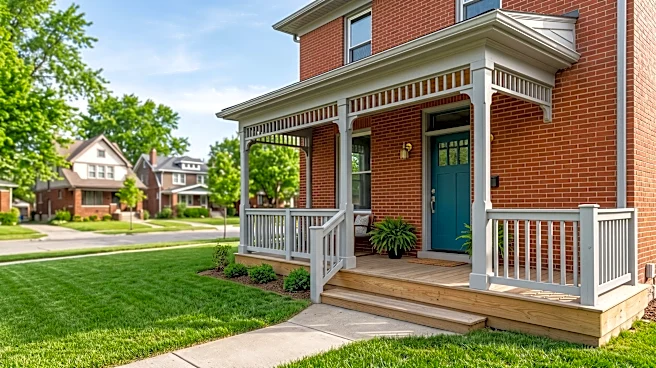
This report highlights a critical and widening disparity in energy affordability and home maintenance across the U.S., termed the 'retrofit gap.' It reveals that homes most in need of energy efficiency upgrades are often owned by those least able to afford them, particularly homeowners of color and those in older homes. The rising energy costs, coupled with an aging housing stock (median age 44 years), mean that inefficient homes are costing residents more, effectively wasting money on heating and cooling that escapes through poor insulation. This situation not only creates financial hardship, forcing families to make difficult choices between energy bills and other necessities like food and medicine, but also undermines the long-term wealth-building potential of homeownership. The current focus of public programs on bill assistance rather than energy efficiency improvements means the root causes of energy insecurity are largely unaddressed, perpetuating a cycle of high costs and inadequate housing conditions.
What's Next?
The report suggests that current policy approaches, which predominantly fund bill assistance programs like LIHEAP (Low-Income Home Energy Assistance Program) over weatherization and home repair initiatives, need re-evaluation. While the Bipartisan Infrastructure Law and the Inflation Reduction Act allocated significant funds for home energy upgrades, many of these programs have faced interruptions or freezes, leaving underlying drivers of energy insecurity unaddressed. Potential solutions discussed include state and municipal funding for energy-efficient improvements and utility companies offering on-bill financing options. The hope is that the current energy cost crisis will spur new investments in retrofitting homes, similar to how the 1970s energy crisis led to bill assistance programs. Addressing the retrofit gap will require a shift towards policies that support comprehensive home energy assessments and upgrades, ensuring that all homeowners, regardless of income or race, can improve their homes' efficiency and reduce long-term energy burdens.
Beyond the Headlines
The 'retrofit gap' extends beyond mere financial strain, touching upon profound ethical and social equity issues. The disproportionate impact on homeowners of color, who are less likely to make energy-related repairs and spend less when they do, underscores systemic inequalities in housing and access to resources. This creates a cycle where vulnerable populations are trapped in less efficient homes, facing higher energy bills and reduced comfort, while wealthier households can invest in upgrades that lower their costs and increase their property value. The long-term implications include not only environmental concerns due to increased energy consumption but also public health issues stemming from structurally deficient homes and the behavioral trade-offs families are forced to make. Addressing this gap requires a holistic approach that integrates energy policy with housing, social justice, and economic development initiatives to ensure equitable access to safe, affordable, and energy-efficient housing for all.