






What's Happening?
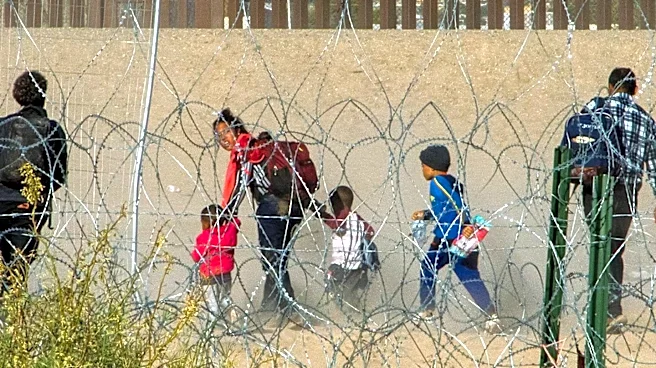
Renowned Polish filmmaker Agnieszka Holland has directed 'Green Border' (2023), a film that tackles the humanitarian crisis at the Polish-Belarusian border. The movie portrays the plight of migrants caught in the geopolitical tensions of the region. Holland's
generation of filmmakers in Poland, active since the 1970s, has historically felt a responsibility to address difficult ethical, social, and political issues, a movement known as 'Kino Moralnego Niepokoju' (cinema of moral anxiety). The scenario for 'Green Border' was developed at Holland's request, with nearly every event depicted being based on real occurrences. Holland and her co-authors, Gabriela Łazarkiewicz-Sieczko and Maciej Pisuk, meticulously researched and verified their sources, collecting testimonies from individuals on both sides of the border. The film was made in a state of 'urgency and anger' due to the treatment of migrants, a situation exacerbated by Belarusian President Alexander Lukashenko's policy of using refugee transit to destabilize Poland and the European Union.
Why It's Important?
The film 'Green Border' is important as it brings international attention to a significant humanitarian and political crisis at the border of Poland and Belarus. By depicting the harsh realities faced by migrants, the film serves as a powerful commentary on the ethical responsibilities of nations and the human cost of political maneuvering. The film's focus on the Polish-Belarusian border highlights the broader challenges of migration within Europe and the complex interplay between national security, human rights, and international relations. The film's authentic portrayal, based on real testimonies, underscores the urgency and severity of the situation, potentially influencing public opinion and policy discussions regarding migrant treatment and border management in the region and beyond. It also reflects a continuing tradition in Polish cinema of addressing profound societal issues.
What's Next?
The release of 'Green Border' is likely to continue to spark debate and discussion surrounding migration policies and human rights at the Polish-Belarusian border. The film's critical reception and public discourse could pressure European governments and international organizations to re-evaluate their approaches to border control and humanitarian aid. Filmmaker Agnieszka Holland's history of addressing complex social and political issues suggests that 'Green Border' will contribute to ongoing conversations about accountability and compassion in times of crisis. The film's impact may extend to influencing future artistic endeavors that explore similar themes, encouraging more nuanced and empathetic portrayals of migrant experiences.
Beyond the Headlines
Beyond its immediate narrative, 'Green Border' delves into the deeper ethical and moral dimensions of the migrant crisis. It questions the humanity of policies that treat individuals as political pawns and highlights the psychological toll on those caught between borders. The film's commitment to authenticity, drawing from real-life accounts, underscores the importance of storytelling in bearing witness to suffering and challenging official narratives. It also reflects a broader trend in cinema to engage with contemporary global issues, using the medium to foster empathy and critical thinking. The film's exploration of the 'cinema of moral anxiety' tradition suggests a cultural imperative to confront uncomfortable truths, even when they are politically sensitive.