




What's Happening?
The U.S. House of Representatives has passed the AM Radio for Every Vehicle Act (H.R. 979) by voice vote under suspension of the rules. This bipartisan legislation, reintroduced by Representatives Gus Bilirakis (R-FL) and Frank Pallone (D-NJ) in 2025,
aims to mandate the inclusion of AM radio in new vehicles. The bill garnered 317 House cosponsors and cleared the House Energy & Commerce Committee with a 50-1 vote. This development follows over three years of advocacy by broadcasters, including the Colorado Broadcasters Association, which actively campaigned for the bill after several automakers announced plans in 2023 to remove AM radio from new vehicles. The legislation now moves to the U.S. Senate for further consideration.
Why It's Important?
The passage of the AM Radio for Every Vehicle Act is significant for several reasons, particularly concerning public safety and communication infrastructure. AM radio is highlighted as a resilient communication method during emergencies, capable of reaching rural communities without relying on cellular signals, Wi-Fi, or credit card access. It provides essential local news, weather, and potentially life-saving information when other communication systems fail. The bill's advancement underscores a broader effort to preserve free radio access in vehicles and maintain a direct connection between local broadcasters and their communities. For broadcasters, this represents a major victory in their fight against the removal of AM radio from new automobiles, which they view as crucial for public service and community engagement.
What's Next?
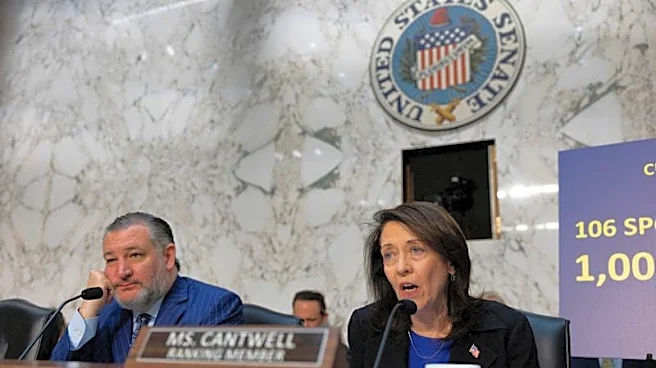
Following its passage in the House, H.R. 979 will now proceed to the U.S. Senate. Companion legislation, S. 315, has already cleared the Senate Commerce Committee and has secured more than 60 bipartisan cosponsors. The next step involves the Senate taking action on the bill, with advocates pushing for its final passage to send it to the President for signature. Broadcasters and their supporters will continue to lobby senators to ensure the legislation completes its journey through Congress. The outcome in the Senate will determine whether AM radio will be legally mandated in all new vehicles, solidifying its role in the national communication landscape.
Beyond the Headlines
This legislative effort extends beyond simply preserving a legacy technology; it touches upon critical aspects of public infrastructure and equitable access to information. The debate over AM radio in vehicles highlights the tension between technological advancement and the maintenance of traditional, reliable communication channels, especially in an era of increasing digital reliance. The emphasis on AM radio's role in emergency broadcasting raises questions about the resilience of modern communication systems and the potential vulnerabilities of a purely digital infrastructure during widespread outages. Furthermore, the bipartisan support for the bill suggests a recognition of AM radio's unique value, particularly for underserved and rural populations, and its contribution to local community cohesion and civic engagement.