

What's Happening?
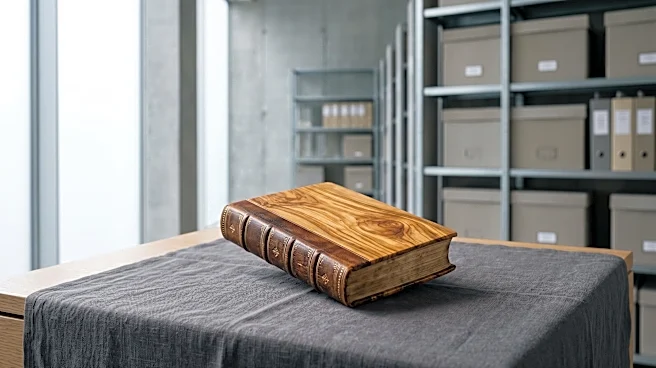
During the 1948 War of Independence, an Israeli medic named Moshe Kamara was saved from a Jordanian sniper's bullet by a prayer book he carried in his breast pocket. The bullet pierced the olivewood cover of the prayer book and became lodged in its final
pages. Kamara, serving in Company B of the Mikhmas Battalion, was hit during fighting around the Russian Monastery in Gush Etzion. His comrade, Shmuel Bazak, recounted how Kamara, after being hit, surprisingly got up and continued running. Years later, it was discovered that the bullet had stopped beside the Hebrew words 'Melech memit umechayeh,' meaning 'the King who brings death and gives life,' almost completely obscuring the word 'memit' (brings death). Kamara's children have now donated the prayer book to the Kfar Etzion archive, returning the artifact to the site where its story began.
Why It's Important?
This story holds significant cultural and historical importance, particularly for Israel and the Jewish community. It serves as a powerful testament to survival and faith during a pivotal moment in Israeli history—the War of Independence. The miraculous nature of the event, where a prayer book literally saved a life, resonates deeply with narratives of divine intervention and resilience. The donation of the prayer book to the Kfar Etzion archive ensures its preservation as a tangible piece of history, allowing future generations to connect with the personal sacrifices and extraordinary circumstances of the war. It reinforces the cultural value placed on religious texts and their symbolic protection. Furthermore, the story contributes to the collective memory of the Gush Etzion battles, highlighting the bravery of individuals like Moshe Kamara and the profound impact of the conflict on the nascent state of Israel. It also offers a poignant human element to historical accounts, making the past more relatable and impactful.
What's Next?
The prayer book, now housed in the Dov Knohl Gush Etzion Archive, will become a permanent exhibit, accessible to researchers, historians, and the general public. Its inclusion in the archive will likely lead to its feature in educational programs and historical narratives about the 1948 War of Independence and the Gush Etzion region. The story of Moshe Kamara and his prayer book may be further documented and shared through various media, including publications, documentaries, and museum displays, ensuring its continued legacy. The archive's director, Dr. Shuki Sharir, has already described the donation as a powerful story connecting life, death, and the history of Gush Etzion. This artifact will serve as a focal point for discussions on faith, survival, and the human experience during wartime, drawing visitors and scholars interested in the personal dimensions of historical conflicts.
Beyond the Headlines
Beyond its immediate historical and cultural significance, the story of Moshe Kamara's prayer book delves into deeper themes of faith, destiny, and the psychological impact of war. The precise location where the bullet lodged, obscuring the word 'brings death,' adds a layer of profound spiritual interpretation, suggesting a miraculous intervention. This narrative can serve as a powerful symbol of hope and resilience in the face of extreme adversity, resonating with individuals and communities grappling with conflict and loss. It also highlights the personal artifacts that become imbued with extraordinary meaning during wartime, transforming ordinary objects into sacred relics. The story encourages reflection on the role of faith in survival and the ways in which individuals find meaning and strength amidst chaos. It underscores the enduring power of personal stories to humanize historical events and to transmit values across generations, fostering a deeper understanding of the human spirit's capacity for endurance and belief.