




What's Happening?
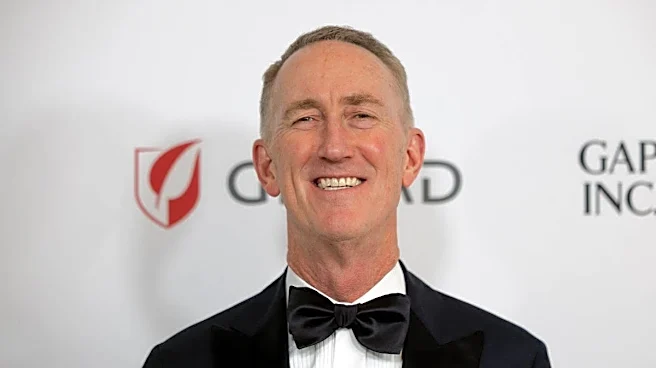
Democratic incumbent Sarah Elfreth is preparing for the November general election in Maryland's 3rd Congressional District against Republican nominee Berney Flowers. Elfreth, who is finishing her first term in Congress after six years in the Maryland Senate,
holds a significant fundraising advantage. Her campaign has raised nearly $1.14 million this cycle, with approximately $336,000 cash on hand as of the June 30 FEC deadline. This funding comes from a mix of individual donors, with about 78% from Maryland residents, and political action committees (PACs). Notably, defense and government-contracting PACs contributed roughly $95,000, or 22% of her total PAC money, despite her vote against the FY27 National Defense Authorization Act. Labor union PACs contributed about $62,000, and the American Israel Public Affairs Committee's (AIPAC) PAC gave $5,000. In contrast, her challenger, Berney Flowers, a retired Air Force officer, has raised about $12,700, with approximately $2,000 cash on hand, indicating a 90-to-1 fundraising gap. The district, which covers Howard County, most of Anne Arundel County, and part of Carroll County, is considered a D+12 lean, favoring Elfreth.
Why It's Important?
The substantial fundraising disparity in Maryland's 3rd Congressional District highlights the financial realities of modern political campaigns and the challenges faced by challengers in heavily leaning districts. Elfreth's ability to attract significant funding from diverse sources, including PACs from defense contractors, despite a vote against a defense authorization bill, underscores the complex relationship between campaign finance and legislative actions. This dynamic can influence a representative's policy priorities and responsiveness to various interest groups. For Flowers, the limited financial resources mean a grassroots, low-dollar campaign, which is often an uphill battle against an incumbent in a district with a strong partisan lean. The outcome of this election, while seemingly predetermined by the district's Democratic lean and the fundraising gap, will still reflect the voters' sentiment and the effectiveness of different campaign strategies in a highly polarized political landscape. The district's affluence and its role as home to Fort Meade and a significant defense contracting workforce further emphasize the importance of understanding the financial backing of its representatives.
What's Next?
As the November general election approaches, the focus will be on how Berney Flowers attempts to overcome the significant fundraising and partisan disadvantages. His campaign will likely rely on grassroots efforts and direct voter engagement to counter Elfreth's well-funded operation. Elfreth, with her substantial financial resources, is expected to continue her campaign activities, potentially including increased advertising and outreach. The campaign finance filings will continue to be scrutinized for further insights into the funding sources and spending patterns of both candidates. Voters in Howard County, Anne Arundel County, and Carroll County will also consider the statewide constitutional amendment on redistricting on their November ballot, though it does not directly affect this particular congressional race. The election results will ultimately determine whether the district's strong Democratic lean and Elfreth's financial advantage translate into a comfortable victory, or if Flowers' grassroots approach can make a notable impact.
Beyond the Headlines
The vast fundraising gap in this congressional race points to broader issues within the U.S. political system, particularly the influence of money in elections and the challenges of competitive races in gerrymandered or strongly partisan districts. The reliance on PAC contributions, even from industries that might seem at odds with a candidate's voting record, raises questions about the potential for quid pro quo or the subtle shaping of legislative agendas. It also highlights the difficulty for lesser-funded candidates to gain traction, potentially limiting voter choice and the diversity of perspectives in Congress. The case of Elfreth's funding from defense contractors despite her vote against a defense bill could indicate a strategic approach by PACs to maintain relationships across the political spectrum, or it could suggest that individual votes do not always deter broader financial support. This situation also underscores the ongoing debate about campaign finance reform and the need for greater transparency and accountability in political donations to ensure that elected officials are primarily responsive to their constituents rather than special interests.