





What's Happening?
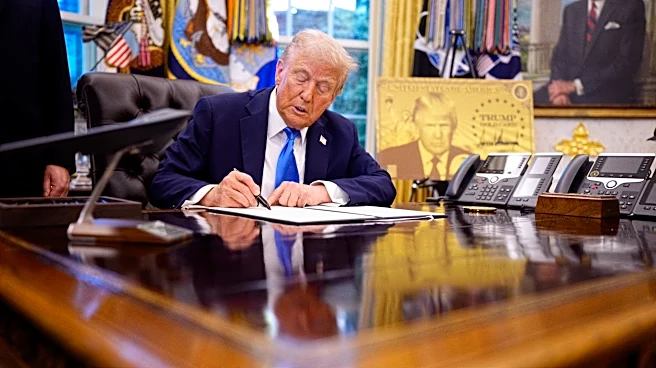
A federal judge has nullified the Trump administration's $100,000 fee on H-1B visa applications, siding with 20 Democratic-led states that argued the fee exceeded executive authority. The H-1B visa program, crucial for hiring foreign workers in specialized
roles, is heavily utilized by research universities and tech companies. The fee, introduced in September, was intended to encourage hiring American workers but faced criticism for potentially hampering the recruitment of foreign talent. The ruling, celebrated by plaintiffs, highlights the legal limits of executive power in setting immigration fees without congressional approval.
Why It's Important?
The decision is pivotal for higher education and tech sectors, which rely on H-1B visas to fill critical positions. The fee posed a financial burden on institutions and businesses, potentially affecting their ability to attract skilled workers. By overturning the fee, the ruling supports the continued flow of international talent, essential for innovation and competitiveness in the U.S. economy. The case underscores the tension between federal immigration policies and the operational needs of key economic sectors, with broader implications for future policy-making.
What's Next?
The Trump administration intends to appeal the ruling, suggesting ongoing legal proceedings. The outcome of the appeal will be closely watched by stakeholders, as it could influence future immigration policy and executive authority. Universities and tech companies will need to stay informed about developments to adjust their recruitment strategies accordingly. The case may also prompt legislative discussions on the balance of power between the executive branch and Congress in setting immigration-related fees.