





What's Happening?
The Trump administration has initiated a plan to allow over 660 million pounds of additional foreign beef into the U.S. at a lower tariff rate for the next 90 days, starting September 1. This measure aims to increase supply and reduce consumer costs for beef at grocery
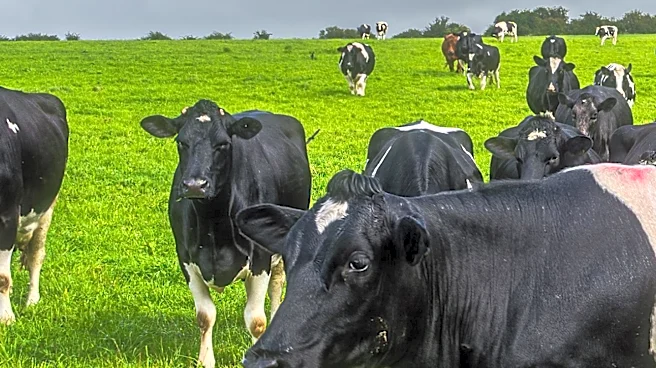
stores. However, Virginia cattle farmers, including those in Botetourt County, have expressed significant concerns about the potential long-term damage this policy could inflict on the domestic beef supply. During a roundtable discussion at Williamson Farms, producers conveyed their worries directly to Governor Abigail Spanberger, arguing that while the plan might offer a short-term solution for consumers, it could undermine the stability and future investment in local herds. The process of bringing beef products to market is lengthy, often taking years, which makes the industry particularly vulnerable to sudden shifts in market dynamics caused by increased imports.
Why It's Important?
This policy is important because it highlights a conflict between immediate consumer price relief and the long-term viability of domestic agricultural industries. For U.S. consumers, the immediate benefit is potentially lower beef prices, which could ease household budgets. However, for Virginia's more than 21,000 cattle producers, the influx of cheaper foreign beef could lead to reduced pay and diminished capacity to invest in growing future herds. This could result in a contraction of the domestic supply well beyond the initial 90-day period, creating a ripple effect throughout the agricultural infrastructure. Farmers are already contending with challenges such as drought, processing bottlenecks, and rising input costs for fuel and fertilizer. Governor Spanberger characterized the federal move as a 'betrayal' of those who have consistently worked through difficult conditions, emphasizing that market responses to cheaper imports could have severe consequences for local ranchers.
What's Next?
In response to the concerns raised by cattle farmers, Governor Spanberger and local producers are advocating for strategies that support the domestic beef industry. Farmers at the roundtable suggested focusing on expanding processing capacity within Virginia and promoting programs that connect consumers with local beef, such as the Virginia Verified Beef labeling initiative. This program ensures that beef purchased is bred, born, and raised within the commonwealth, aiming to build consumer loyalty and support for local producers. The commonwealth is also directing over $300 million towards agricultural best management practices, which Spanberger believes can help farms achieve long-term sustainability. The effectiveness of these state-level initiatives in mitigating the impact of the federal tariff policy on foreign beef remains to be seen, as the 90-day period of lower tariffs progresses.
Beyond the Headlines
The Trump administration's decision to lower tariffs on foreign beef, while seemingly a direct economic measure to benefit consumers, carries deeper implications for the U.S. agricultural landscape and the philosophy of trade policy. It underscores the tension between globalized supply chains and the protection of domestic industries. The long-term nature of cattle farming, with its multi-year investment cycle, makes it particularly susceptible to policy changes that favor short-term market adjustments. This situation could lead to a broader debate about food security and the resilience of national food systems. If domestic producers are consistently undercut by cheaper imports, it could lead to a decline in agricultural self-sufficiency, making the U.S. more reliant on foreign sources for essential goods. This also raises ethical questions about the government's role in balancing consumer welfare with the livelihoods of its own producers, especially in sectors with significant lead times for production.