



What's Happening?
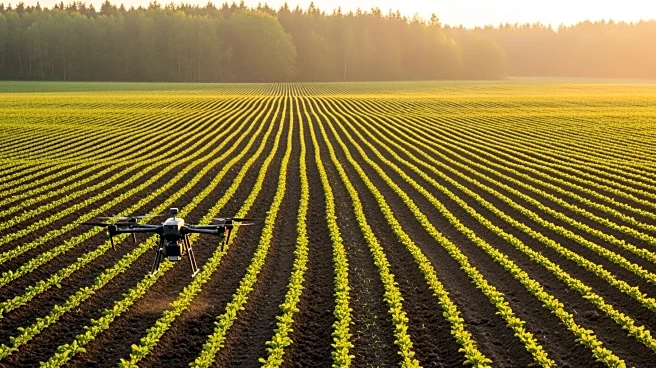
Roraima, a state in Brazil previously known for its isolated forests, is undergoing a significant transformation into a major agricultural hub. This change is driven by the region's fertile soil, favorable climate, and strategic planting windows, which
allow for year-round production. The Brazilian Agricultural Research Corporation (Embrapa) has played a crucial role in this transformation by developing crop varieties specifically suited to Roraima's conditions. The state is now seeing an increase in soybean, corn, and integrated livestock farming, with some farms adopting intensive systems that include irrigated rice and cattle fattening. This integrated crop-livestock-forestry model enhances efficiency and reduces costs, making Roraima an attractive destination for agricultural producers.
Why It's Important?
The agricultural expansion in Roraima is significant for Brazil's national agribusiness sector, as it opens up new opportunities for production and export. The region's ability to produce crops during off-seasons when other areas are not in production provides a competitive advantage, potentially leading to increased income for local farmers. The development of infrastructure, such as processing facilities and improved logistics, further supports this growth. However, challenges remain, including energy integration, land regularization, and access to credit. Overcoming these barriers could further enhance Roraima's role as a key player in Brazil's agricultural landscape, offering long-term potential for producers seeking new land.
What's Next?
As Roraima continues to develop its agricultural capabilities, the focus will likely be on addressing existing challenges to sustain growth. Efforts to integrate the state into the national energy grid, streamline land regularization, and improve access to credit will be crucial. Additionally, further investment in research and technology by institutions like Embrapa will be necessary to meet the growing demand for innovation in farming practices. The state's proximity to export routes and neighboring regions experiencing economic growth, such as Guyana, could also open new markets and opportunities for collaboration.
Beyond the Headlines
The transformation of Roraima from an isolated forest to a thriving agricultural frontier highlights the potential for sustainable development through strategic use of natural resources and technology. The integrated crop-livestock-forestry model not only boosts productivity but also promotes environmental sustainability by enhancing soil fertility and reducing the need for expansion into new areas. This approach could serve as a model for other regions seeking to balance agricultural growth with ecological preservation.