


What's Happening?
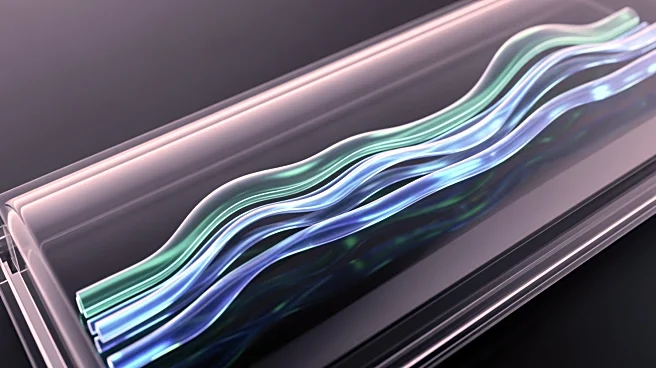
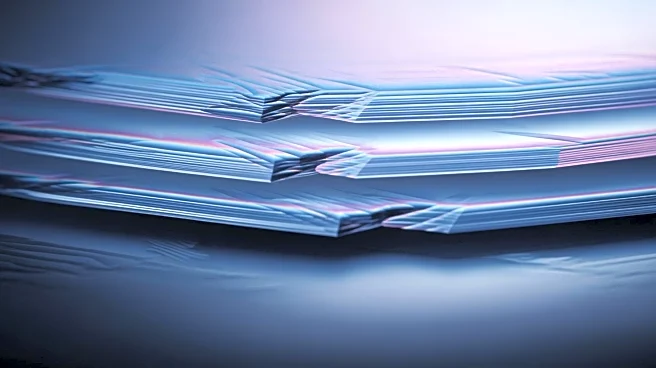
The Nature journal has published a collection focusing on sliding regimes in van der Waals polytypes, which are unique stacking arrangements of atomic layers forming metastable periodic crystals. These configurations can change under external stimuli,
such as vertical electric fields, which induce interlayer sliding. This phenomenon, known as sliding ferroelectricity, offers a lower switching barrier compared to traditional ferroelectrics, enabling high-speed, low-energy data writing. The collection highlights the potential for these materials to enhance switching efficiency, scalability, and structural robustness. Additionally, sliding structural transitions provide a platform for property engineering, allowing electrical control over two-dimensional phenomena like magnetism and superconductivity. The collection invites contributions from various scientific communities to explore the implications of these materials in computing architectures.
Why It's Important?
The exploration of sliding regimes in van der Waals polytypes is significant for the advancement of computing technologies. These materials offer a novel approach to data storage and processing, potentially leading to more efficient and robust computing architectures. The ability to control intrinsic two-dimensional phenomena electrically could revolutionize the design of electronic devices, impacting industries reliant on high-speed data processing and storage. Furthermore, the unique mechanical properties of these materials, such as high in-plane stiffness and low interfacial friction, could lead to innovations in device durability and performance. This research could pave the way for new technological applications, enhancing the capabilities of quantum materials and expanding the possibilities for future computing solutions.
What's Next?
The collection encourages further research and contributions from experimental, theoretical, and computational studies to advance the understanding of sliding regimes in van der Waals polytypes. Researchers are invited to propose new theoretical models, discover materials, and develop device concepts that utilize these unique properties. The ongoing exploration of these materials could lead to breakthroughs in quantum computing and other advanced technologies. As the scientific community continues to investigate these phenomena, collaborations across disciplines may emerge, fostering innovation and potentially leading to the commercialization of new technologies based on these materials.
Beyond the Headlines
The implications of sliding regimes in van der Waals polytypes extend beyond immediate technological advancements. Ethically, the development of more efficient computing architectures could reduce energy consumption, contributing to environmental sustainability. Legally, the discovery and application of these materials may lead to new intellectual property challenges, as companies and researchers seek to protect their innovations. Culturally, the integration of these advanced materials into everyday technology could shift societal expectations regarding device performance and capabilities. Long-term, the research could influence educational curricula, emphasizing the importance of quantum materials in future technological developments.