


What's Happening?
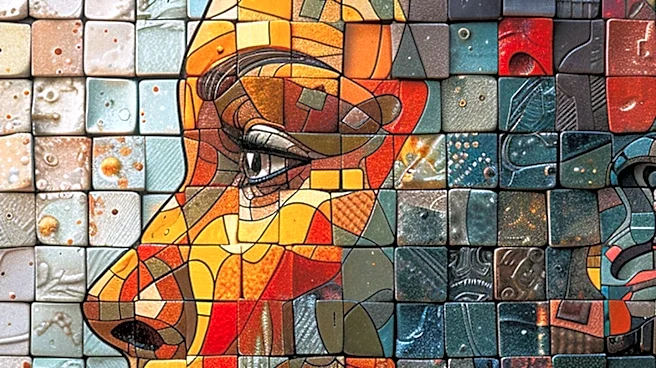
Archaeologists in Rome have unveiled what is believed to be the largest ancient Roman wall mosaic ever discovered, known as the 'Muse and the Philosopher.' This monumental mosaic, measuring approximately 10 meters high and 16 meters wide, is located on the Oppian
Hill overlooking the Colosseum, beneath the Baths of Trajan. Dating from the 1st century AD, the composition depicts an elaborate architectural setting, interpreted as a two-tiered theatrical backdrop (scaenae frons), featuring columns, architectural façades resembling marble inlay, statues, and figures including Muses, a bearded philosopher, and the god Apollo. Most of the mosaic was uncovered during excavations in 2011, with recent investigations revealing an additional section depicting maritime villas surrounding a Roman harbor. The mosaic is now accessible to the public for the first time with the opening of the new Museum of the Baths of Trajan, though access is currently restricted to small groups on selected days with advance booking.
Why It's Important?
The discovery and public unveiling of the 'Muse and the Philosopher' mosaic represent a significant archaeological and cultural event, offering unprecedented insights into Roman art, architecture, and daily life during the 1st century AD. Its monumental size and intricate details provide valuable information about the artistic techniques and thematic preferences of the period. The mosaic's location beneath the Baths of Trajan, a massive public complex, highlights the grandeur and sophistication of Roman urban planning and engineering. This discovery enriches our understanding of the historical landscape of ancient Rome, particularly the area around the Domus Aurea and the later Trajanic baths. For historians, art historians, and archaeologists, it offers new material for study and interpretation, potentially reshaping existing theories about Roman artistic development and the use of public spaces. For the public, it provides a tangible connection to a rich historical past, enhancing cultural tourism and education.
What's Next?
Excavation of the mosaic is still ongoing, suggesting that further discoveries and revelations about its full extent and context are anticipated. Researchers will continue to analyze the newly exposed section depicting maritime villas to determine if it represents a real Roman port or an idealized landscape. The cultural heritage authorities will likely gradually expand public access to the new Museum of the Baths of Trajan, potentially increasing the number of visiting days and group sizes as operational logistics are refined. Further conservation and restoration efforts will be crucial to preserve the mosaic and the adjacent 'Painted City' fresco. Academic publications and exhibitions will undoubtedly follow, disseminating new findings and interpretations to the global scholarly community. The site will continue to be a focal point for archaeological research, potentially leading to a deeper understanding of the transition from Nero's Domus Aurea to Trajan's public baths.
Beyond the Headlines
The 'Muse and the Philosopher' mosaic, along with the 'Painted City' fresco in the same archaeological structure, offers a profound glimpse into the Roman imperial mindset and its artistic expressions. The theatrical backdrop depicted in the mosaic suggests a society that valued performance, intellectual discourse, and mythological narratives. The sheer scale of these artworks, found beneath later constructions, speaks to the continuous layering of history in Rome and the enduring legacy of its empires. Ethically, the careful excavation and preservation of such sites underscore the responsibility of modern society to protect and interpret cultural heritage for future generations. The public's engagement with these ancient artifacts can foster a greater appreciation for history and the arts, encouraging critical thinking about the past's influence on the present. This discovery also highlights the ongoing potential for significant archaeological finds even in well-studied historical sites, reminding us that much of the past remains hidden beneath our feet.