
What's Happening?
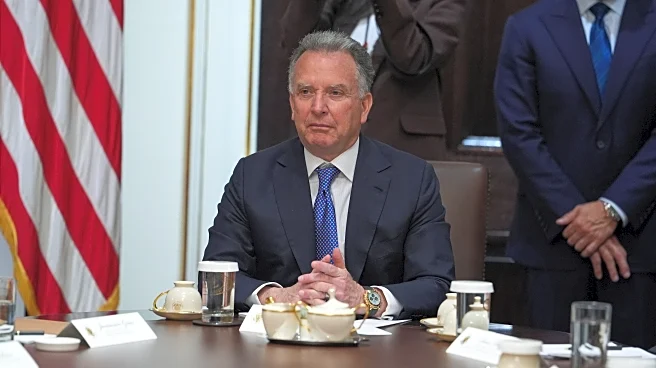
The United States is advancing to the second phase of its Gaza peace plan, focusing on demilitarization, technocratic governance, and reconstruction. President Trump's special envoy, Steve Witkoff, announced
the establishment of a transitional technocratic Palestinian administration in Gaza. This administration will be led by Ali Abdel Hamid Haath, a former deputy minister of Palestinian planning. The plan aims to disarm unauthorized personnel and reconstruct Gaza. The Palestinian Authority, along with Egypt and Turkey, has welcomed this development. Hamas has expressed willingness to hand over control of Gaza and engage in discussions about its weaponry. However, Israeli Prime Minister Benjamin Netanyahu emphasized that the return of the final Israeli hostage body remains a top priority.
Why It's Important?
The implementation of a technocratic administration in Gaza is a significant step towards stabilizing the region. It aims to reduce military tensions by disarming unauthorized groups and focusing on reconstruction efforts. This move could potentially lead to improved living conditions for Palestinians in Gaza and foster a more peaceful environment. The involvement of international mediators like Qatar, Egypt, and Turkey highlights the global interest in resolving the conflict. However, the success of this plan depends on the cooperation of all parties involved, including Hamas and Israel. The plan's progress could influence U.S. foreign policy and its role in Middle Eastern peace processes.
What's Next?
The next steps involve the actual implementation of the technocratic administration and the disarmament process. The U.S. expects Hamas to comply with its obligations, including the return of the final deceased hostage. Failure to do so could result in serious consequences. The flow of aid into Gaza is expected to increase, although some essential supplies are still being denied. The situation remains critical, with the risk of starvation still present. The international community will likely continue to monitor the situation closely, and further negotiations may be necessary to address ongoing challenges.